With an older dog or cat, the question comes out the same way every time: is this just age, or is something wrong? A change that has been building over weeks usually has something medical behind it, and pain is one of the most common causes, along with cognitive decline and illnesses that are easy to overlook. What you notice at home is where the answer starts, because the pacing at night, the new grumpiness about being touched, and accidents that never used to happen point toward the tests worth running.
Noah's Ark Veterinary Hospital in Williamsburg sees senior dogs and cats twice a year for this reason, because six months is long enough for a problem to take hold quietly. Those senior wellness visits give us a baseline to measure a new change against, and the lab work and imaging at our AAHA-accredited hospital can tell a painful joint or mouth from something internal. You know your pet's normal better than anyone, and our job is to take what you have noticed and find the reason for it. If something about your older dog or cat seems off to you, tell us what you are seeing and we will start there.
Four Things to Know When an Older Pet Acts Different
- A behavior change that lasts more than a few days in an older dog or cat is usually medical, and pain is one of the most common reasons.
- New irritability, accidents from a house-trained pet, restless nights, confusion, or a shift in appetite or thirst are reasons to come in rather than wait.
- Cognitive dysfunction syndrome is diagnosed only after the conditions that imitate dementia have been ruled out.
- Treating the underlying problem often brings back the dog or cat a family has been missing, so these changes are worth chasing early.
When Is a Behavior Change Really Vision or Hearing Loss?
A dog who startles when touched from behind and a cat who hesitates at the top of the stairs are usually showing sensory loss rather than a bad attitude. Gradual fading gives a pet months to adjust, while sudden loss gives none. Clinging in unfamiliar places, ignoring a recall that always worked, and sleeping through the doorbell fit the same picture.
A dog or cat who abruptly starts bumping into furniture, freezes on familiar stairs, or develops wide pupils that don't respond to light needs to be seen the same day, because sudden blindness can signal high blood pressure, retinal detachment, glaucoma, or another problem where fast treatment sometimes preserves the vision that's left. We see emergencies while we're open, so call and head straight in; after we close, that visit needs a 24-hour emergency hospital.
Which Changes in an Older Dog or Cat Are Worth a Visit?
A departure from your pet's normal that holds for more than a few days belongs on the exam table, whether that's new irritability, a reliable dog having accidents, restless and vocal nights, or the disorientation in familiar rooms that points toward cognitive decline. Appetite and thirst shifts count too, along with weight change in either direction and a pet who no longer wants to be handled.
A phone video of the pacing or of the first few stiff steps in the morning helps too, since plenty of pets move differently once they're in the exam room.
| What you're seeing | What it often points toward | Where we usually start |
| New grumpiness when touched or lifted | Arthritis, dental pain, an injury | Exam, X-rays, a look in the mouth |
| Pacing and vocalizing, flipped day and night | Cognitive decline, thyroid disease, high blood pressure | Bloodwork, blood pressure |
| Accidents from a house-trained pet | Urinary disease, kidney disease, diabetes, pain | Urinalysis, bloodwork |
| Emptying the water bowl, urinating more | Kidney disease, diabetes, Cushing's syndrome | Bloodwork, urinalysis |
| Hiding, sleeping more, quitting a favorite game | Pain, cancer, organ disease | Exam, bloodwork, ultrasound |
| Startling, bumping into things, missing jumps | Vision or hearing loss, high blood pressure | Eye exam, blood pressure |
Can Pain Make My Older Pet Act Differently?
Pain is one of the most common drivers of behavior change in senior pets, and many painful conditions never produce a limp or a yelp. They surface instead as grumpiness, a refusal to get on the couch, or a pet who wants to be left alone. Arthritis and dental disease lead that list, and both build slowly enough that a household adjusts around them without noticing.
Dogs and cats hide discomfort well, so the signs that break through tend to be social ones: withdrawal, a new edge when someone reaches for a sore hip, a cat who stops sleeping on the bed. A pet who has started snapping when handled can bite without warning, so keep children away from the sore area and tell us where it is before the exam. Don't give human pain relievers to a dog or cat. Ibuprofen, naproxen, and acetaminophen injure the kidneys, stomach, and liver at doses that look harmless, and acetaminophen can kill a cat. Call us and we'll find something safe.
Does Arthritis Look Different in Dogs and Cats?
Osteoarthritis is at work in a large share of senior dogs and cats well before anyone notices a stiff morning, and the first sign is often behavioral: a dog who stops meeting you at the door, a cat who stops landing on the windowsill.
| Dogs show it as | Cats show it as |
| Lagging on walks they used to lead, hesitating at the stairs or the car, taking a few seconds to stand, a new snap when a sore hip gets handled | Fewer jumps and lower perches, a scruffier coat where grooming hurts, missing the litter box edge, hiding instead of greeting visitors |
A hands-on exam tells us which joints hurt, and digital X-rays at our Williamsburg hospital show what's happening inside them.
Can Dental Pain Change My Pet's Behavior?
Dental pain changes behavior long before it changes eating. Periodontal disease advances through recognizable stages over months to years, so a mouth that has finally produced foul breath or a loose tooth has usually been sore for a long while.
What families notice first is a dog chewing on one side, a cat who licks the gravy off the wet food and leaves the rest, or a pet who ducks away from a hand near their face. Dropped toys and a shorter fuse during petting count too. Dental care with digital dental X-rays is how we find trouble under the gumline, since the crown of a tooth can look fine while the root underneath is abscessed. Many families tell us their pet acts years younger after a dental cleaning removes the pain and infection from their mouth.
What Senior Diseases Change Mood and Temperament?
Thyroid disease, kidney and liver disease, high blood pressure, cancer, and disease inside the brain can all change how a pet feels before any physical sign shows, which is why a shorter temper, new aggression, or new anxiety in an older pet is often what a family notices first. We start with bloodwork and urinalysis when a temperament shift doesn't add up.
Does Thyroid Disease Affect Dogs and Cats Differently?
Thyroid disease pushes the two species in opposite directions. In cats, hyperthyroidism speeds everything up: night yowling, pacing, a shortened temper, and a ravenous appetite paired with steady weight loss, all of it traceable through a single blood test.
Dogs go the other way. An underactive thyroid, known as hypothyroidism, shows up as:
- Slowing down: less energy, weight gain, and a dull or thinning coat.
- A changed temperament: new anxiety, fearfulness, or a shorter fuse that families rarely trace back to the thyroid.
Thyroid levels belong in the workup for an older dog whose mood has shifted.
Which Organ and Hormone Diseases Change How a Pet Feels?
Chronic kidney disease changes behavior by slowly changing how a pet feels, with nausea and withdrawal settling in alongside the extra drinking and urination that families tend to spot first.
- Liver disease: dullness and a picky appetite come first, and advanced cases cause real confusion as waste products build up in the bloodstream.
- Cushing's syndrome: too much cortisol brings panting, restlessness, a pot-bellied shape, and relentless thirst.
- Diabetes: a hungry, accident-prone dog or cat losing weight despite eating well is the classic picture.
What Does High Blood Pressure Do to an Older Pet?
High blood pressure travels with kidney disease, thyroid problems, heart disease, and diabetes, and it shows up in two ways a family can see:
- Sudden blindness: bleeding or a detached retina inside the eye can take vision within hours, which makes it a same-day emergency.
- Confusion and restlessness: before vision is affected, high pressure can make a dog or cat seem agitated and lost, which looks a lot like dementia.
A blood pressure reading is quick to take at a senior visit, and early treatment can sometimes save or restore vision.
What Early Cancer Signs Have Nothing to Do With a Lump?
A dog who retires from a favorite game or a cat who walks away from a meal they have loved for years can be showing early signs of cancer, and hiding, sleeping more, new weakness, and confusion belong on the same list. So do weight loss, a bad smell, a sore that won't heal, labored breathing, and a change in appetite that holds for more than a few days.
When Does a Behavior Change Point to a Problem in the Brain?
When an older dog or cat develops aggression, confusion, or a personality shift that bloodwork can't explain, disease inside the brain moves up the list. A brain tumor can begin with personality change alone, and the concern climbs quickly when seizures, a new head tilt, or unsteady footing join it. Dementia looks much the same from the outside, and a CT or MRI scan is the only way to see the brain itself. We don't have either here, so a case that needs one goes to a specialty hospital, and we can help set that up.
Is My Older Pet Just Confused, or Is It Dementia?
Dementia is real in pets and common in dogs and cats past about age ten, but cognitive dysfunction syndrome is a diagnosis of exclusion: kidney disease, liver disease, thyroid trouble, pain, a brain tumor, and fading eyes and ears all get ruled out before it goes on the chart.
What Does Dementia Look Like in a Dog or Cat?
The pattern is recognizable rather than a vague slowing down:
- Day and night reversed: sleeping through the afternoon, then pacing at two in the morning.
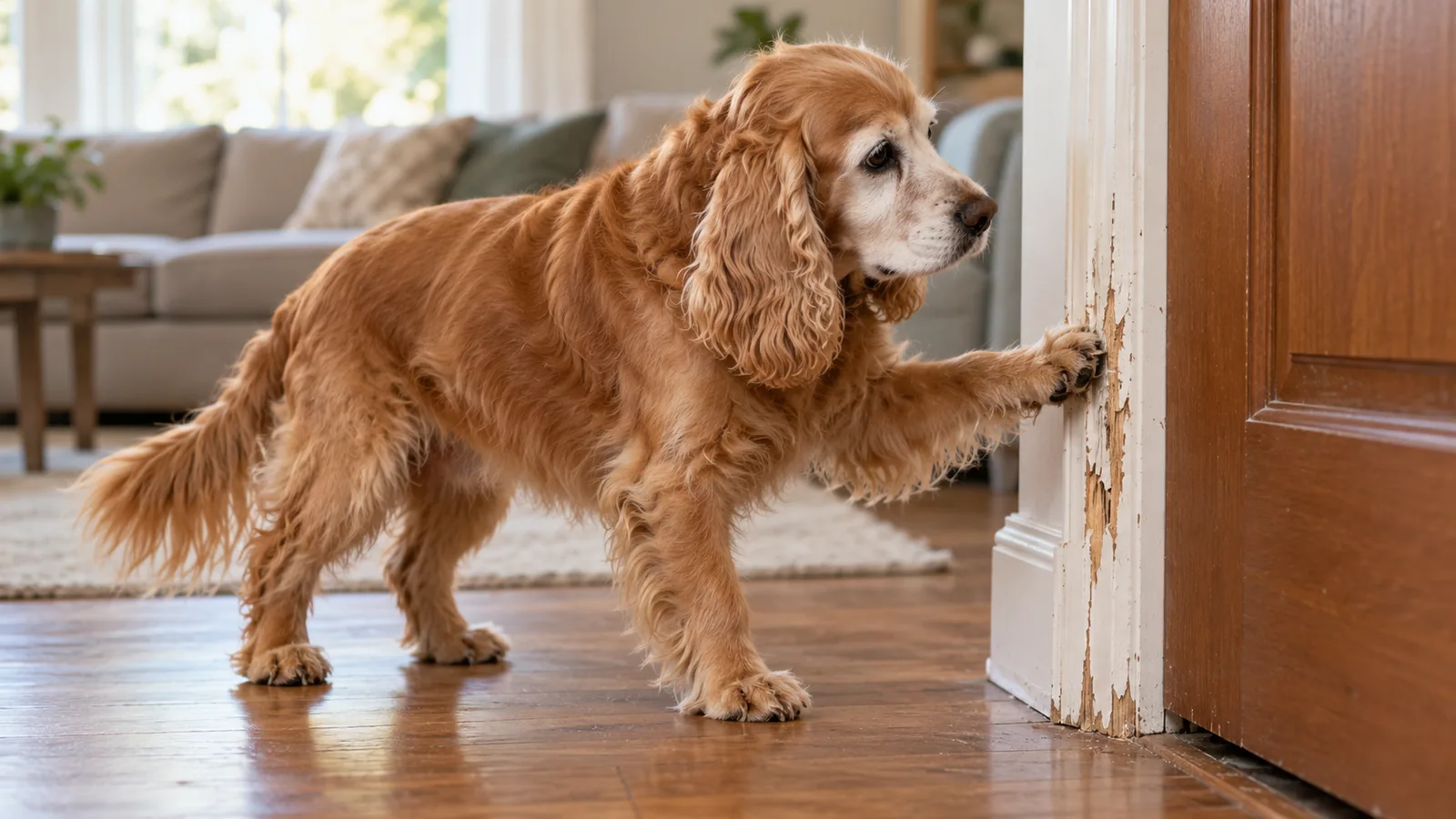
- Getting lost in familiar rooms: standing in a corner, going to the hinge side of a door, getting stuck behind the couch.
- Lost routines: forgetting a cue they've known for years, staring at a wall, or no longer coming to greet people.
- New anxiety: clinginess, restlessness, or vocalizing that starts after dark.
What Happens Once Dementia Is the Answer?
Many of the conditions that imitate that pattern are treatable, and our veterinarians will work through which is most likely in your pet. When dementia is the answer, diet changes, supplements, medication, and a predictable daily routine can slow the progression, and all of them work better started early.
What Causes Accidents in a Pet Who Was Reliable for Years?
Accidents from a dog or cat who held their training for a decade usually trace back to a medical cause rather than to training or spite, with urinary tract disease and bladder stones high on that list, so a urinalysis and senior bloodwork come before any conclusion about behavior.
- Urinary disease: infection, inflammation, and stones make urinating urgent and uncomfortable, and a male cat or dog straining with little to show for it may be blocked, which turns life-threatening within a day.
- Diseases that increase thirst: kidney disease, diabetes, Cushing's syndrome, and feline hyperthyroidism all raise urine volume until the box or the schedule can't keep up.
- Pain and mobility: stiff arthritic joints make the stairs to the yard and a tall litter box edge hard, and a slipped disc in the back, known as intervertebral disc disease, can affect bladder control directly.
- Cognitive decline: some older dogs and cats stop connecting the urge with the door or the box.
If accidents have started, give us a call and we'll get you in, because what's behind it is usually something we can treat.
Age or Illness? What Families Ask About Older Pets
Isn't slowing down just part of getting older?
Healthy aging is gradual and even: a dog who naps a little more each year, a cat who picks the couch over the top of the bookshelf. Something that appeared over two or three weeks and kept going fits pain, organ disease, or a hormone problem far better than it fits age. Ordinary aging doesn't flip a day-night cycle or make a reliable pet start having accidents indoors.
How old is a senior dog or cat?
Cats and small dogs are usually considered senior somewhere around seven to ten, and large and giant breeds get there earlier. The number matters less than the schedule it sets off: an exam every six months and lab work at least yearly once your pet crosses that line.
Does treating the problem really bring my pet's old self back?
Treating the underlying condition changes behavior back more often than families expect. A dog whose arthritis pain gets controlled starts meeting people at the door again, and a cat treated for an overactive thyroid stops yowling at three in the morning. Dementia is the exception, where the goal is slowing a process rather than reversing it, and even then a steady routine and the right medication can buy good months.
What to Do When Your Senior Pet Seems Different
A behavior change is often the only way an older dog or cat can tell you something hurts, and most of what sits behind these changes is something we can treat or slow once we know what it is. Acting in days or weeks rather than months keeps more of those options open, and families are usually right when they say something is different about an older pet. Schedule a senior visit at Noah's Ark Veterinary Hospital in Williamsburg and tell us what you've been seeing.