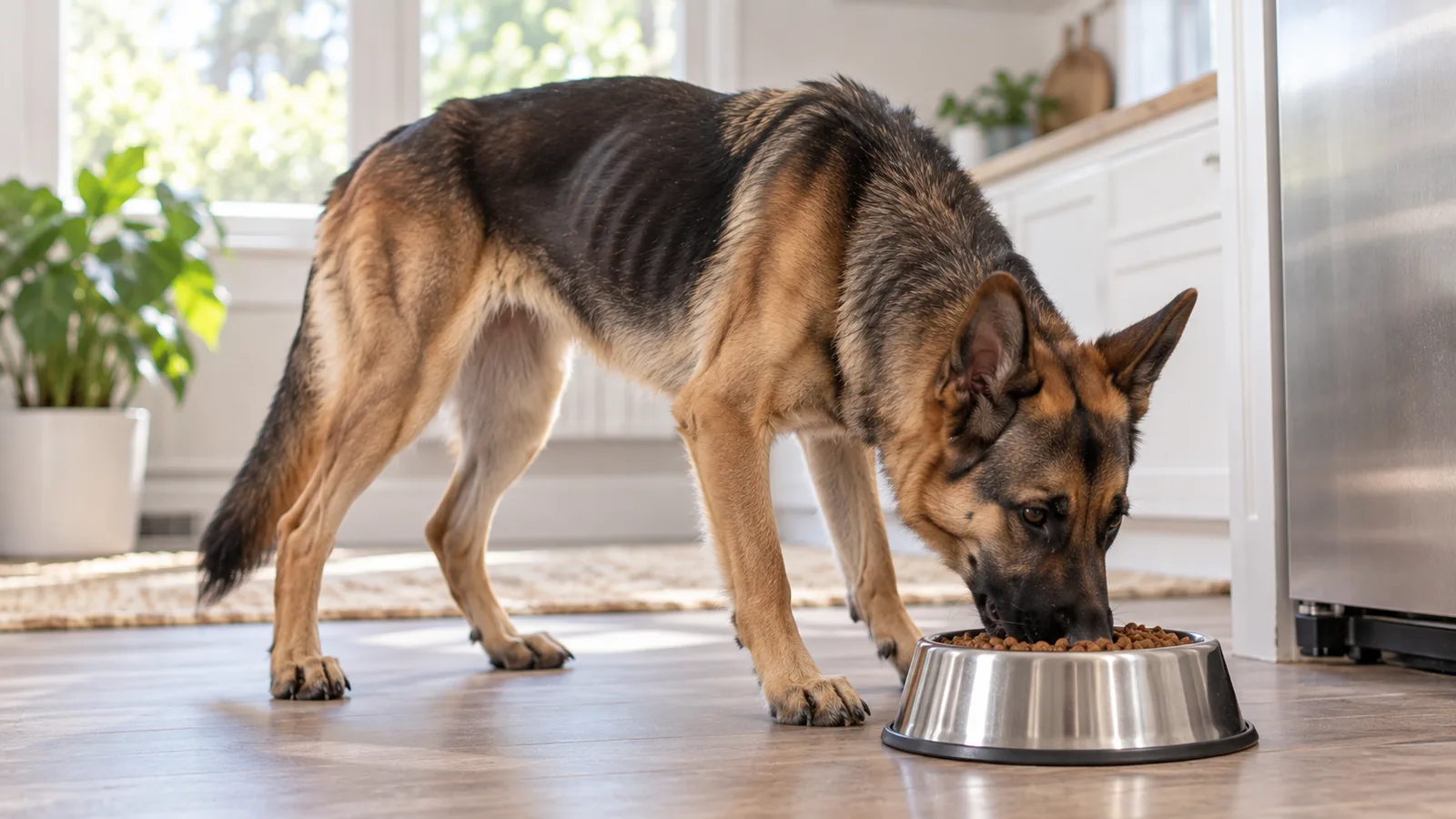
Constant hunger paired with ongoing weight loss is one of the clearest signs of exocrine pancreatic insufficiency, or EPI, a condition where the pancreas no longer makes enough of the enzymes needed to digest food. Without those enzymes, meals pass through largely undigested, so your dog can eat well and lose condition anyway, usually with large, pale, greasy stool and a coat that goes dull. That combination of a big appetite and a body that keeps getting thinner points toward EPI rather than a simple upset stomach, and it will not resolve on its own. The good news is that a blood test confirms it, and most dogs regain their weight once enzyme replacement is added to every meal.
Watching your dog eat like they are starving and lose weight anyway is frightening, and it is not something you should have to sort out alone. Noah's Ark Veterinary Hospital in Williamsburg sees chronic weight loss and loose stool often, and our AAHA-accredited team starts with the diagnostic testing that confirms EPI and rules out the conditions it resembles. EPI is managed for life rather than cured, so we stay close to your dog's progress, adjusting the enzyme dose and the feeding plan as the weight comes back, and we are here for the small questions in between. If your dog is hungry all the time and still losing ground, tell us what you are seeing.
Eating Everything and Gaining Nothing
- EPI isn't a picky-eater problem or an appetite problem; it's a shortage of the digestive enzymes that break food down, so the calories in the bowl never make it into your dog.
- The pattern to watch for is steady weight loss alongside a normal or ravenous appetite, usually with large, pale, greasy stool and a coat that's lost its shine.
- A fasted blood test confirms the diagnosis, so testing comes before months of food changes.
- Treatment is lifelong, and it works: most dogs put the weight back on once the enzyme dose, the diet, and any B12 shortfall are sorted out.
What Is EPI in Dogs, and Why Does a Hungry Dog Keep Losing Weight?
Exocrine pancreatic insufficiency sets in when the enzyme-producing cells of the pancreas waste away or stop working, leaving too little lipase, protease, and amylase to break a meal into pieces the small intestine can absorb. Your dog keeps eating because their body keeps asking for calories it never receives.
Most cases trace back to a slow wasting of that enzyme-producing tissue, a process the immune system drives. German Shepherds, Rough Collies, and Chow Chows are the classic breeds, and it often begins in young adults between one and five years old, though any dog can develop it. The hormone side of the organ, the part that makes insulin, usually keeps right on working, which is why these dogs stay bright and playful while the scale drops: nothing looks sick, the dog just gets thinner.
Does a History of Pancreatitis Put a Dog at Risk for EPI?
A history of pancreatitis does raise the risk, and it's the second common route into this diagnosis. Chronic pancreatitis trades working pancreatic tissue for scar with every bout of inflammation, until too little is left to keep up with digestion. Vomiting, a hunched or praying posture, a tender belly, and a dog who suddenly wants nothing to do with dinner are the signs of pancreatitis worth acting on quickly.
Plenty of dogs weather a rough episode and never head down that path, but the history is worth mentioning at the appointment, and an abdominal ultrasound, which we run in-house, gives us a look at the pancreas when that background is part of the picture.
What Are the Signs of EPI in a Dog?
The hallmark of EPI is a dog who eats well, or begs constantly, and still gets thinner week over week, because food moves through the gut undigested and never reaches the rest of the body. That pairing is what separates this from an ordinary bout of stomach upset.
Here's what families tend to notice first:
| What you're seeing at home | What's behind it |
| Weight loss with a strong or ravenous appetite | Calories pass through undigested, so hunger never switches off |
| Large, pale, greasy, foul-smelling stool | Fat and starch leaving in the stool instead of being absorbed |
| Scavenging, grass eating, or eating stool | A hungry gut hunting for calories anywhere it can find them |
| Dull, dry, or flaky coat | Fatty acids and fat-soluble vitamins aren't getting through |
| Gas, gurgling, and a noisy belly | Bacteria fermenting what the enzymes never broke down |
Large, pale, greasy piles point at a small-intestinal absorption problem, while the small, frequent, straining kind of diarrhea most families picture usually traces back to the colon instead. That distinction tells us where to look first, so describe what you're finding in the yard.
How Is EPI Diagnosed in Dogs?
EPI can't be confirmed from signs alone. TLI testing measures how much pancreatic enzyme is circulating in a fasted blood sample, and a low result confirms the diagnosis outright, which is why testing comes before treating instead of after months of diet trials that were never going to work.
The appointment itself is simple. Your dog fasts overnight, we draw a small blood sample, and it goes to a reference lab for the enzyme measurement. Our in-house bloodwork runs alongside to check the other causes of chronic weight loss and loose stool, including liver disease, kidney trouble, low protein, and diabetes. A fecal test rules out parasites such as Giardia and whipworms, which look much the same from the outside and are far more common.
Why Does Vitamin B12 Matter for a Dog with EPI?
Absorbing cobalamin, the form of vitamin B12 a dog gets from food, depends on both a working pancreas and a healthy last stretch of small intestine, so dogs with EPI frequently run low and stall out at a thin weight even after the enzymes are on board. Folate usually gets measured from the same sample, because the two values together hint at where in the gut the trouble sits. Correcting a shortfall is straightforward, by injection or by mouth, and our veterinarians recheck the level to be sure it's holding.
How Does Enzyme Replacement Therapy Work?
Enzyme replacement comes down to powder or capsules stirred into every moistened meal for the rest of a dog's life, with the amount tuned to the individual dog rather than set by a weight chart. Miss a meal's worth and that meal goes undigested, so consistency matters more than precision.
A few practical notes make the routine easier:
- Every meal counts: any food that needs digesting needs enzymes with it, including the second breakfast someone in the house slipped your dog.
- Moisten and wait: powder stirred into damp food and left to sit a few minutes works better than a dry sprinkle on top.
- The starting dose is a starting point: it gets adjusted up or down based on stool quality and how the weight responds.
- Watch the mouth: a small number of dogs get oral irritation from the powdered form, and switching to capsules usually solves it.
Most dogs turn a corner within a couple of weeks, with firmer stool first and weight following. If neither is heading in the right direction, call us before doubling anything on your own.
What Should a Dog with EPI Eat?
Nutritional management leans on a highly digestible food a damaged system can keep up with, and fat level and fiber content are the two levers we adjust most while a dog is still stabilizing.
Highly digestible means the protein and starch are already easy to break apart, which leaves less work for the enzymes. Fat is a balancing act, since your dog needs those calories to rebuild condition, yet it's the hardest nutrient for an enzyme-short gut to handle. High-fiber options tend to work against enzyme activity, so a low-residue food often sits better. Smaller, more frequent meals help too, because each one arrives with its own dose.
Treats and chews are food as well, and they need the same coverage. Nutrition counseling takes in the whole plate, from the main diet to whatever rides in your pocket on a walk. No single formula suits every dog, and landing on the right combination of dose, food, and supplements can take a few weeks.
Why Isn't My Dog Improving on Enzymes?
A dog who isn't putting weight back on despite a correct enzyme dose almost always has one of the concurrent conditions that travel with EPI, and until that second problem gets its own treatment, the weight stays stuck. All that undigested food feeds bacteria where they don't belong, so small intestinal bacterial overgrowth is usually the first thing we look at.
| What else may be going on | What it looks like | What it usually takes |
| Bacterial overgrowth in the small intestine | Gas and loose stool that persist on a good dose | A targeted course of antibiotics, sometimes with a probiotic |
| Low cobalamin | Weight stays flat, energy stays low | B12 supplementation and a recheck of the level |
| Intestinal parasites | Diarrhea that comes and goes | Fecal testing and the right dewormer |
| Chronic enteropathy | Ongoing diarrhea, low protein on bloodwork | A diet trial, further workup, sometimes medication |
| Diabetes mellitus | Extra drinking and urinating on top of the weight loss | Blood and urine testing, then insulin if confirmed |
A dog with EPI who stops eating, vomits repeatedly, or goes painful in the belly is a different situation and shouldn't wait it out, and our team handles urgent care while we're open.
What Does Life with EPI Look Like Long-Term?
This is a condition we manage rather than cure, and a dog whose plan is dialed in lives a full, comfortable life. Most regain the lost weight within a month or two, grow a proper coat back, and turn into the dog their family remembers.
The day-to-day of living with EPI settles into a rhythm: enzymes at every single meal, weight and bloodwork checked on a schedule, and other families who have already solved the practical problems you are about to hit. We follow the numbers that matter with weight and body condition rechecks and periodic labs, B12 included, and we adjust the plan as your dog's needs shift.
A dog who has been running on empty needs time to rebuild muscle, so be patient through the first few weeks. Everyone in the house has to know the rule about enzymes with every meal, kids and visiting grandparents included. Don't stop the enzymes once your dog looks well, because the weight comes back off without them. Flare-ups happen, and a change in appetite or stool is worth a phone call rather than a wait-and-see.
Questions We Hear About EPI from Dog Families
Is EPI the same thing as pancreatitis?
They're two different problems in the same organ. Pancreatitis is inflammation, and it tends to arrive with vomiting, belly pain, and a dog who won't touch dinner. EPI is a shortage of digestive enzymes, and those dogs usually feel fine and eat everything in sight. The connection runs in one direction: repeated inflammation can damage enough tissue over time to leave a dog short on enzymes later. One dog can certainly have both in their history.
Can my dog manage on a special diet instead of enzymes?
Food changes alone rarely get there. The enzymes are the missing piece, and no recipe replaces them; the best a diet swap does on its own is soften the signs for a while. Once enzyme replacement is in place, the right food makes it work better and keeps the stool consistent.
How soon should we see the weight coming back?
Stool usually firms up within a week or two, and the scale tends to follow over the next month or so. A dog who lost a lot of condition takes longer, because rebuilding muscle is slower work than refilling a fat layer. If nothing has shifted after a few weeks on a steady dose, that's our cue to look for low B12, bacterial overgrowth, or a second condition rather than to keep waiting.
Helping Your Dog Get Their Weight Back
EPI has a name, a test, and a treatment that works for most dogs. Noah's Ark Veterinary Hospital sees this pattern in Williamsburg dogs, and once the diagnosis is in hand we stay close through the adjusting: the dose, the food, the B12, and the rechecks that show it's working. If your dog is hungry all the time and losing ground, get testing on the schedule and let's find out why.