A growl is communication before it is anything else, and it points to fear or pain far more often than to true aggression. Dogs growl when they are scared, when they are guarding something they value, and when something hurts, whether that is an infected tooth, an arthritic hip, or a sore back that flares when someone reaches over them. That makes the growl worth listening to: it is the warning a dog gives before a snap or a bite. Punishing the growl does not change how your dog feels; it only teaches them to skip the warning, which is exactly how a dog becomes unpredictable.
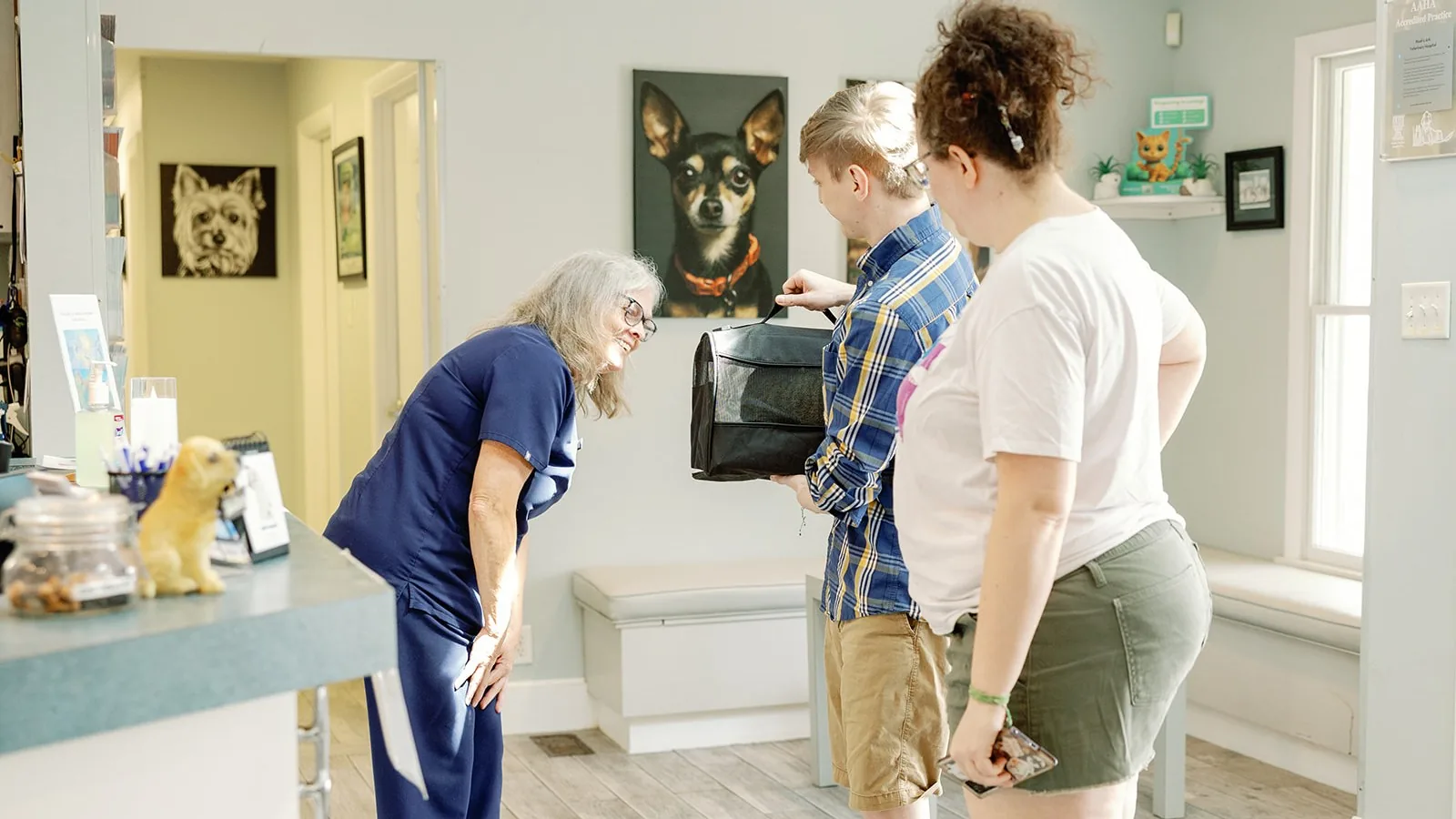
Our first job with a growling dog at Noah's Ark Veterinary Hospital in Williamsburg is finding out whether pain is part of the picture. A hands-on exam, digital X-rays of the mouth and body, and in-house bloodwork help us find or rule out the painful tooth, sore joint, or hidden illness a growl can be protecting. When the medical workup comes back clean, we help you read what your dog is saying and talk through next steps that keep everyone in the house safe. If the growling is new or out of character for your dog, request an appointment with our AAHA-accredited hospital and we will start looking for the why.
The Growl, Translated
- A growl is communication, not defiance: it's your dog's way of saying they're uncomfortable and need a little room before things go further.
- Fear and pain drive far more growling than any wish to dominate, so genuine aggression is much less common than it looks.
- Punishing a growl teaches a dog to skip the warning, which is how a previously predictable pet ends up biting without notice.
- A growl that's new or out of character needs a hands-on veterinary exam, so pain and illness get ruled out before anyone calls it a training problem.
Is My Dog's Growl a Warning or Just Bad Behavior?
A growl is honest information, not a discipline problem. Growling is your dog telling you plainly that they're uncomfortable and asking for a little space, and a dog who growls is showing restraint, reaching for the clearest signal they have short of their teeth.
That reframe matters, because the instinct when a dog we trust suddenly growls is to shut the sound down. The goal is never to make the sound stop; it's to understand what the sound is about.
Why Do Dogs Growl?
Most growling traces back to worry, not a power play: the reasons dogs growl run toward fear and discomfort far more often than any wish to dominate, and the real work is figuring out which worry is doing the talking.
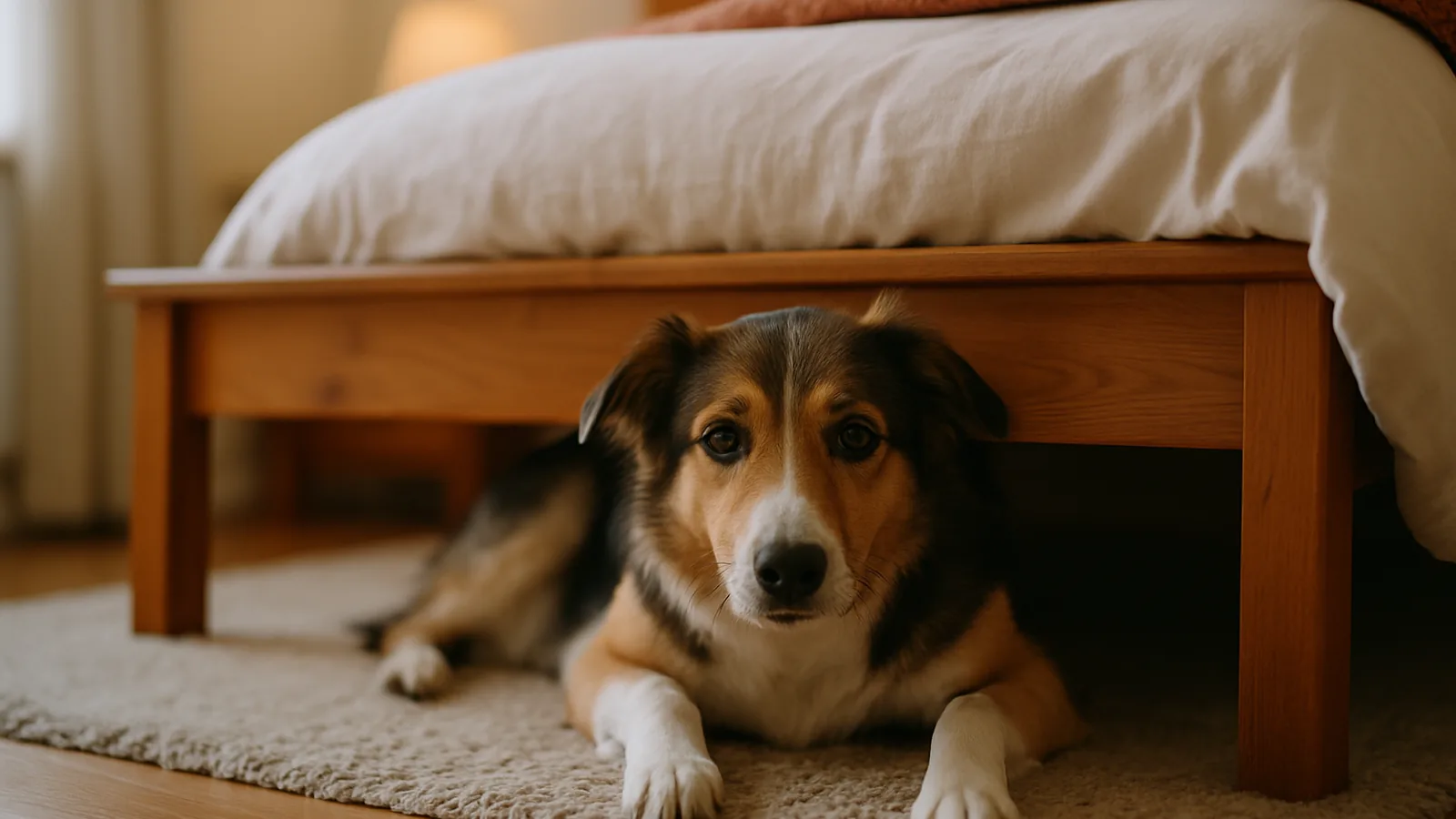
One of the most common mix-ups is reading a frightened dog as a protective one. Telling a protective dog from a scared one is hard, because the two can look almost identical from across the room; the posture is the same, but the emotion driving it is usually fear.
Here's a quick map of what a growl is usually about:
| What the growl is about | What it usually means |
| Fear or feeling trapped | Your dog sees no safe way out and warns you to back off |
| Resource guarding | Worry that a valued meal, toy, chew, or spot is about to disappear |
| Pain or illness | Being touched, lifted, or approached hurts somewhere |
| Startle or crowding | A fast approach, a hug, or a reach over the head feels threatening |
| Leash reactivity | The leash has removed the option to move away from a worry |
| Play | Loose, bouncy noise during tug or wrestling, with a wagging back end |
What About Growling Over Food, Toys, and Space?
Growling over the food bowl, a favorite toy, or a claimed cushion is called resource guarding, and it's one of the most common and most misread reasons dogs growl. Resource guarding grows out of a dog's worry that something valuable is about to disappear, which is exactly why snatching the bowl or toy away tends to deepen the fear instead of fixing it. It's common in pets who have a history of living on the street without regular meals or needing to compete for food. Trading up, tossing something better as you walk past, and giving your dog room to eat in peace all teach the opposite lesson: good things show up when people come near.
Why Does My Dog Growl and Lunge on Leash?
Leash reactivity is one of the most common versions of this whole story. When your dog spots something that worries them, another dog, a skateboard, a stranger in a hat, their biology offers two hardwired answers: move away from the scary thing or drive it off. Fight or flight. The leash quietly takes flight off the menu, so the loud option is the only one left, and the growling, lunging display at the end of the leash is a worried dog doing the one thing the leash still allows.
That's also why punishing leash reactivity backfires so reliably: it piles more bad feelings onto a dog who is already in over their head. The better path is the engage-disengage game, which teaches your dog to glance at the trigger from a comfortable distance and then look back at you for a reward. Over time, the scary thing becomes a cue to check in with you instead of a reason to explode, and the distance your dog needs shrinks on its own.
Is It Normal for a Puppy to Growl?
A growling puppy sends new families into a spin, but a growl at eight weeks is usually information, not a sign of a mean dog in the making. Puppy growling can mean anything from happy play to real distress, and the way a family answers it in those early weeks shapes how the grown dog handles discomfort later. Play noise comes with a loose, wiggly body and an easy pause when the game stops; distress comes with a stiff frame, a tucked tail, or a puppy trying to get away. Gentle handling, early socialization, and letting a young dog say no without punishment build a confident adult, which is part of what we discuss during puppy wellness care.
What Warning Signs Come Before a Growl?
By the time a dog growls, they've usually been asking for space for a while in a quieter voice. Reading your dog's body language lets you step in long before the volume ever comes up.
Dogs tend to escalate along a fairly predictable ladder, from quiet unease to an open warning:
| Stage | What it can look like |
| Early unease | Lip licking, yawning when nobody's tired, looking away, a quick head turn |
| Clearer discomfort | A lowered body, ears pinned back, whale eye where the whites show |
| Freezing | Your dog goes still and stops chewing or moving, a big red flag |
| Open warning | Growling, a lifted lip, showing teeth, or an air snap |
Catching those earliest signs of fear, anxiety, and stress buys you time to change the situation before your dog feels cornered. That matters most when the house is full, over the holidays or on a busy Williamsburg summer weekend, because your dog has less room to retreat and more hands reaching toward them.
Could Pain or Illness Be Behind a New Growl?
A growl that's new, especially when you touch, groom, or handle your dog, needs a veterinary exam before anyone calls it a behavior problem. A dog who suddenly growls when lifted or brushed may simply be hurting, since the conditions that cause pain, arthritis, dental disease, ear infections, a sore back, are common and easy to overlook, and illness can change behavior even when nothing hurts.
The quieter pain signs, a stiffer gait, hesitating at the stairs, eating more slowly, a shorter fuse than usual, often show up as a change in behavior well before anything looks obviously wrong.
Which Illnesses Can Change a Dog's Behavior?
Pain isn't the only medical driver of a new growl. Hypothyroidism, a condition where the thyroid gland stops making enough hormone, is best known for weight gain and a thinning coat, but in some dogs it can show up as irritability or even aggression. Cognitive decline can leave a senior dog confused and quick to startle. Brain tumors and seizure disorders can rewrite behavior from the inside, and a dog losing their vision has a very good reason to growl at a hand they never saw coming.
Our workup starts hands-on, feeling for the sore joint, the painful mouth, or the tender belly a growl might be protecting. Digital radiographs let us look at teeth, hips, and spine, and our in-house bloodwork and imaging check for illness that doesn't show on the surface, including the thyroid testing that catches hypothyroidism. Rule pain and illness in or out first, and the behavior conversation gets a lot simpler.
What Happens When You Punish a Growl?
Punishing a growl doesn't fix the fear underneath it; it just teaches your dog that warning people is unsafe, so next time they skip the growl and go straight to a snap or a bite. The feeling is still there; you've only removed the heads-up that used to come with it.
Think of the growl as a smoke alarm. It isn't the fire; it's the thing telling you the fire exists. Rip the battery out and the kitchen still fills with smoke, only now nobody gets the warning.
This matters most around children and visitors, who can't read a dog that has had every warning trained out of them. Plenty of popular advice still tells families to correct a growl on the spot, so the dog doesn't "get away with it." That advice is backwards. A dog who feels free to growl is a dog still handing you the information you need to keep everyone safe.
What Should I Do When My Dog Growls Around Kids?
Take it seriously, separate the dog and child calmly, and skip the scolding. A dog who growls at kids is not a bad dog; they're telling you that children, who are unpredictable, loud, and fast-moving, genuinely frighten them, and that they need more space and your help managing the situation.
From a dog's point of view, even a sweet child can be alarming: kids squeal, run, fall, grab fur, and reach for faces, all without warning. Management works in both directions, and the child's half of it matters just as much as the dog's:
- Teach kids to read the dog: A dog who walks away, freezes, licks their lips, or turns their head is saying "not now," and children can learn to spot those signals surprisingly young.
- Make the growl a stop sign: Kids should know that a growl means stop, back up, and get an adult, never that it means the dog is being naughty.
- Protect the dog's space: Beds and crates are off-limits to children, food bowls don't get touched while the dog is eating, and high-value toys and chews are enjoyed in peace.
Never leave dogs and young children together unsupervised, even a dog who has always been patient. If the growling around kids is frequent or escalating, bring us in early so we can build a plan that protects both your child and your dog.
How Often Is Growling Actually Aggression?
Most of what looks like aggression is fear in a louder outfit: genuine aggression is far less common than the fear-driven behavior that mimics it, and a dog with no room to escape will often default to a response that reads as a threat but comes from panic. Telling the two apart usually takes a professional eye.
Some patterns point past home management: growling that keeps escalating despite space and patience, bites that break skin, stiff and silent staring, or triggers that keep multiplying. That's the moment to bring us in: behavior consultations are part of the care we provide, where we rule out pain first and then map out a plan, which may include working with a veterinary behaviorist for the more entrenched cases.
How Should You Respond When Your Dog Growls?
The constructive response isn't to shut the growl down but to lower the fear behind it. In the moment that means calmly making space, no scolding and no forcing your dog to hold still.
Managing reactive behavior starts with keeping a dog under the threshold where they can still think, then rebuilding calmer associations with the trigger a little at a time. A few steps keep you moving in the right direction:
- Give space in the moment: Move your dog away from what worried them before asking anything of them, so they aren't stuck making a scared choice.
- Name the trigger: Note what was happening right before the growl, the nail clippers, the doorbell, the hand reaching for the collar, so you know what you're working with.
- Reward the calm you want: Positive reinforcement training is the only approach that lowers the fear underneath a growl, because it rewards the calm choices you want to see instead of punishing the warning you don't.
- Go slow and stay steady: Progress comes in small steps, and quiet, consistent practice beats occasional intense sessions every time.
- Bring in help early: A trainer who uses reward-based methods can help you identify triggers and create a plan for desensitizing them to what's causing the fear.
There's a longer payoff hiding in this approach. Every time you respect a growl, adding space instead of a scolding, you teach your dog something bigger than any single command: that speaking up works. A dog who knows you'll listen and help when they're uncomfortable doesn't have to shout to be heard, and in a genuinely scary moment they're far more likely to look to you for guidance than to handle it with their teeth. That trust is built one respected growl at a time.
Should I Muzzle-Train My Reactive Dog?
If your dog's growling has ever tipped into snapping, a basket muzzle is one of the kindest safety tools you can add, and it's worth introducing before you need it. A well-fitted basket muzzle lets your dog pant, drink, and take treats while making a bite impossible, which protects everyone and lets training happen closer to real-world triggers without holding your breath.
The key is positive muzzle training: introduced gradually, with the muzzle predicting treats and good things, most dogs learn to push their nose in happily. A muzzle should never appear as a punishment after a growl, because that only confirms the dog's fear. Think of it the way you'd think of a seatbelt: not a verdict on your dog's character, just a margin of safety while you work on the fear underneath.
Frequently Asked Questions About Dog Growling
Is it ever okay to let my dog growl?
Letting a dog growl feels wrong, but the growl itself isn't the problem. It's honest communication, and a dog who can growl is one still willing to warn you before things escalate. You don't want to actively encourage it, but you don't want to punish it away either. Respect what it's telling you, add distance, and look for what's making your dog uncomfortable so you can address the cause rather than the sound.
My dog growls when I touch a certain spot. Should I be worried?
A dog who growls when one specific area is touched is often telling you it hurts. A sore ear, an aching hip, a bad tooth, or a tender belly can all turn a relaxed pet into a flinch and a warning. Because this pattern points to pain more than personality, it's worth scheduling an exam rather than waiting to see if it passes.
Why has my older dog started growling out of nowhere?
A senior dog who begins growling has usually had a change on the inside, not a change of heart. Arthritis, dental disease, and fading hearing or vision make being touched or startled genuinely uncomfortable. A dog who can't hear you approach is easier to spook, and one whose joints ache will guard against a hand that used to be welcome. A new growl in an older dog is a reason for an exam, not a scolding.
Listening to What Your Dog Is Telling You
A growling dog is a communicating dog, and the families who listen instead of correct tend to end up with calmer, more confident pets. Rule out pain first, find the trigger, and get help while the problem is still small. If your dog's growling is new, escalating, or just out of character, schedule a visit with us at Noah's Ark Veterinary Hospital in Williamsburg and we'll start with a thorough exam to find the why.