A round, scaly patch of hair loss on your dog can indeed be ringworm, a skin infection caused by a fungus rather than any kind of worm, and it can pass to people through direct contact or through contaminated bedding and brushes. Children, seniors, and anyone with a weakened immune system pick it up most easily, which is why the question matters beyond your dog's coat. The catch is that not every bald patch is ringworm: bacterial skin infections, mange mites, and allergies can look nearly identical, and each is treated differently. Testing settles the question, and once ringworm is confirmed, it clears up reliably with antifungal treatment and some patience with household cleanup.
Noah's Ark Veterinary Hospital in Williamsburg can take the guesswork out of a suspicious patch. We examine the skin, collect hair and skin samples from the affected areas, and use our in-house lab and skin cytology to sort true ringworm from look-alikes such as mange and bacterial skin infections. Because ringworm spreads to other pets and to people, a clear answer early keeps one bald patch from turning into a household problem. If your dog has a patch you are not sure about, request an appointment and we will take a look.
The Short Course on Ringworm
- Ringworm is a fungal infection of the skin, hair, and nails, not a worm and not a parasite.
- It spreads both ways between pets and people, so a confirmed case in your dog is a whole-household situation, not just your dog's problem.
- Treatment reliably works, but it takes weeks to months and depends on finishing the full course rather than stopping when the skin looks better.
- Cleaning the home is half the job, because fungal spores linger in bedding, carpet, and on brushes and reinfect a pet who's otherwise on the mend.
What Is Ringworm in Dogs, and How Do Dogs Catch It?
Despite its name, ringworm is a fungal infection of the skin, hair, and nails, and dogs most often pick it up through direct contact with an infected animal or a contaminated object where spores can survive for many months. The fungi behind it feed on keratin, the protein that makes up hair and the outer skin layer, which is why the coat and nails are where it shows up.
Those infectious spores don't need a living host to stick around. They settle into carpet, bedding, and the bristles of a shared brush and stay capable of starting a new infection long after the original patch has healed. A dog can pick the fungus up at a boarding kennel, a groomer, a Williamsburg dog park, a shelter, or simply from a housemate, and no bite or scratch is required.
Puppies and kittens, senior pets, and any animal with a weakened immune system get infected more readily, because a robust immune response is what usually keeps casual fungal exposure from turning into a full infection. Skin that's already damaged, such as a scratch, a hot spot, or a grooming nick, gives spores an easier foothold. Stress, poor nutrition, and crowded living conditions raise the odds too, which is one reason ringworm spreads so readily through shelters and multi-pet homes.
What Does Ringworm Look Like on a Dog?
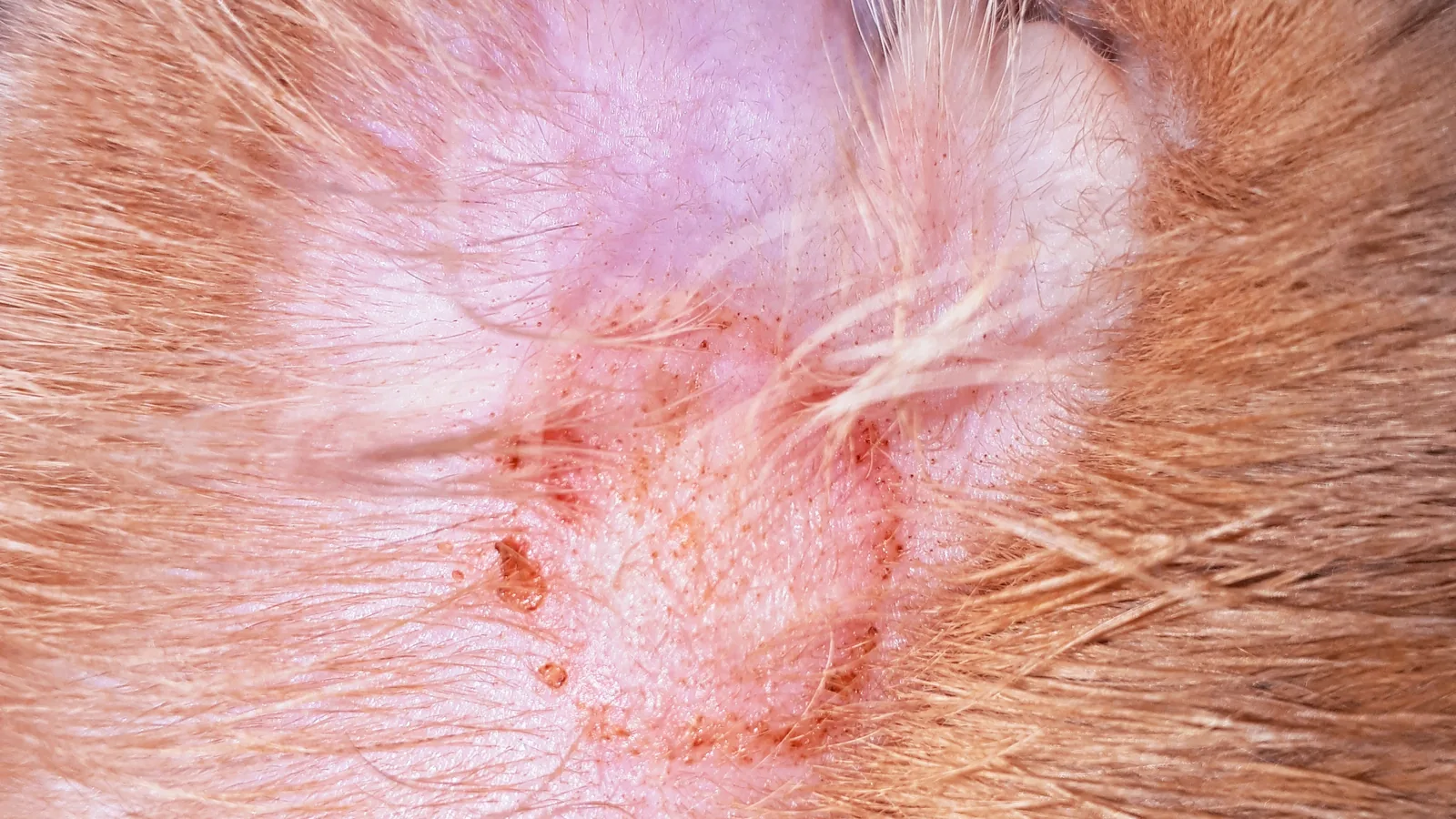
Ringworm on a dog rarely reads like the tidy picture the name suggests. The signs of ringworm reach well beyond the classic circular patch, showing up as scattered hair loss, scaly or crusty skin, reddened areas, and brittle, misshapen nails that look like several other skin problems. Some dogs itch, many don't, and the lesions can appear almost anywhere, though the face, ears, paws, and tail see them most.
Because the presentation is so variable, appearance alone isn't a diagnosis, and guessing wrong wastes weeks. Here's how the common look-alikes compare.
| Condition | How it can look like ringworm | What actually sets it apart |
| Ringworm | Patchy hair loss, scaling, crusting, sometimes a ring | Fungal, confirmed by culture or lab testing |
| Demodectic or sarcoptic mange | Bald patches, redness, crusting, itching | Caused by mites, found on a skin scraping |
| Bacterial skin infection | Circular crusts, hair loss, redness | Bacterial, often secondary to allergies or a wound |
| Allergies (flea, food, environmental) | Itching, hair loss from scratching, inflamed skin | Driven by an immune reaction, not an organism |
If a patch turns up that doesn't obviously match one clear cause, that's exactly the moment to have the skin evaluated rather than reaching for an over-the-counter cream. We can look at the lesion, take samples, and tell you which of these you're dealing with, which decides everything that comes next.
How Is Ringworm Diagnosed?
Confirming ringworm in dogs takes more than a look, because the look-alikes are too convincing to trust the eye alone. The most reliable test is a fungal culture, which can take one to three weeks to grow before it can be read, and that wait is normal rather than a sign that nothing is happening.
Several tools work together, each answering a slightly different question:
- Ultraviolet lamp exam: A specialized light called a Wood’s Lamp makes some ringworm strains glow, which is a fast screen, but it misses many cases and gives false positives, so a green glow is a starting clue rather than an answer.
- Skin cytology and direct exam: Looking at plucked hairs and skin cells under the microscope can catch fungal spores directly and, just as usefully, rules mange mites and bacteria in or out on the spot.
- Fungal culture: Growing the organism from a hair sample is the gold standard, and it also tells us exactly which fungus is involved, which is why it's worth the wait.
Our in-house cytology lets us examine those hair and skin samples the same day, which often points us in the right direction even while a culture grows in the background. When a culture is the right call, we set clear expectations up front so you know what the wait means.
How Is Ringworm Treated in Dogs?
Ringworm treatment almost never rests on a single product. Treating ringworm usually combines topical therapy on the coat, oral antifungal medication working from the inside, and environmental cleanup, and it runs for weeks to months rather than clearing up in a few days.
Two mistakes trip up families more than any others, and both are about timing. The first is expecting fast results; the skin often looks worse before it looks better, and real improvement takes weeks. The second is costlier: stopping treatment the moment the coat looks normal. A dog whose skin has cleared on the outside can still be shedding fungus, and quitting early is the most common reason ringworm comes roaring back.
Appearance isn't the finish line. Follow-up testing, usually a repeat culture, is what tells us a dog is clear, and we typically want negative results before calling treatment done. Rather than committing to a fixed calendar, we map out the specific plan for your dog based on the diagnosis, the severity, and a conversation with you about what's realistic at home.
Can People and Other Pets Catch Ringworm from a Dog?
People and other pets can catch ringworm from a dog, known as zoonosis, and it travels in both directions. Ringworm transmission passes through direct contact with an infected animal and through the spores left on shared surfaces, bedding, towels, and grooming tools, with young children, older adults, and anyone whose immune system is weakened facing the highest risk.
Preventing spread is mostly common sense:
- Wash your hands after handling an infected dog
- Avoid pressing your face into their coat during treatment
- Keep the affected pet off beds and couches for the duration
- Wash grooming tools and bedding after usage
On human skin, ringworm usually shows up as a small red, scaly, sometimes itchy ring that slowly expands, and it's easily treated, so if a household member develops a patch like that, a quick visit to their own doctor sorts it out.
One misconception worth correcting: ringworm isn't a sign of a dirty home or poor care, just a common fungal exposure that healthy immune systems often fight off and vulnerable ones sometimes can't. Calm, consistent hygiene is what breaks the chain, and other animals in the house are part of that chain, so having your cat's skin checked alongside the dog matters more than most families expect.
Why Is the Family Cat Often the Hidden Source?
The pet spreading ringworm through your home may be the one who looks perfectly fine. Ringworm in cats can be nearly invisible, since a cat, especially a long-haired one, may carry and shed infectious spores with no bald patches, no scaling, and no itching, which makes a healthy-seeming housemate a common source for an infected dog.
This is why treating only the dog with lesions so often fails. If a symptom-free cat keeps shedding spores, the dog you just cleared gets reinfected, and the cycle restarts. Having every cat in the household checked is often the step that finally breaks a stubborn, recurring case, because you can't solve what you haven't found.
How Do You Clean the House and Stop the Spread?
Treating the dog is only half the job, because the fungus doesn't stay on the dog. Effective ringworm management depends on confining the affected pet to easy-to-clean spaces, laundering or discarding soft items, and wiping down hard surfaces repeatedly, because steady consistency clears an environment faster than any single deep clean.
A workable home routine tends to look like this:
- Contain the mess: Keep the affected pet in rooms with hard, wipeable floors rather than carpeted, upholstered spaces. A smaller footprint means less territory to decontaminate and fewer places for spores to hide.
- Wash soft items often: Launder bedding, blankets, and washable toys on the hottest safe setting, and be willing to toss heavily contaminated or hard-to-clean items rather than fighting them.
- Wipe hard surfaces repeatedly: Floors, crates, and food bowls need regular cleaning with an appropriate disinfectant, and a quick daily pass does more than one deep clean a week.
- Vacuum and toss the bag: Vacuuming picks up shed hairs and spores, but empty the canister or discard the bag right away so you're not just relocating the problem.
- Dedicate the tools: Use separate brushes, towels, and grooming gear for the affected pet and clean them between uses instead of sharing them around the household.
Even the best routine can't stop an untreated housemate who keeps shedding spores, so pair the scrubbing with an exam for every pet under one roof rather than chasing the same patch in circles.
Frequently Asked Questions About Ringworm in Dogs
How long is my dog contagious with ringworm?
A dog generally stays contagious until treatment has meaningfully knocked the infection back, which is usually a few weeks in, not the moment medication starts. Because spores linger, keep practicing good hygiene and containment until follow-up testing confirms the infection has cleared, and lean on the recheck rather than assuming better looking skin means you’re in the clear.
Can ringworm go away on its own without treatment?
In some healthy dogs, a mild case may eventually resolve on its own over several months, but that's a slow and risky bet. During all that time the dog keeps shedding spores that infect other pets and people and contaminate the home, so an untreated case tends to become a household case. Treating it shortens the ordeal dramatically and protects everyone else under the roof.
My other pet has no symptoms. Do they still need to be checked?
A symptom-free housemate still needs to be checked, and cats are the reason it matters so much. Screening a symptom-free cat frequently uncovers the silent carrier who keeps reinfecting the dog you're trying to clear. Checking every animal in the home at once is usually what finally ends a case that keeps coming back no matter how carefully you treat the obvious patient.
Getting Your Dog and Your Whole Household Clear
Ringworm looks alarming, and living through the treatment window tests everyone's patience, but the infection itself is genuinely beatable. The hard part is rarely the medication; it's the consistency, the follow-up testing, and the cleanup that outlast the point where the coat already looks fine. Stick with the plan through the recheck and the fungus doesn't stand much of a chance.
You don't have to figure out which patch is which or how long to keep cleaning on your own. We'll confirm what's really going on, build a treatment plan that fits your dog and your home, and use follow-up testing to tell you when you're truly in the clear. If a suspicious patch has you worried, book your dog's appointment at Noah's Ark and we'll help you sort it out.