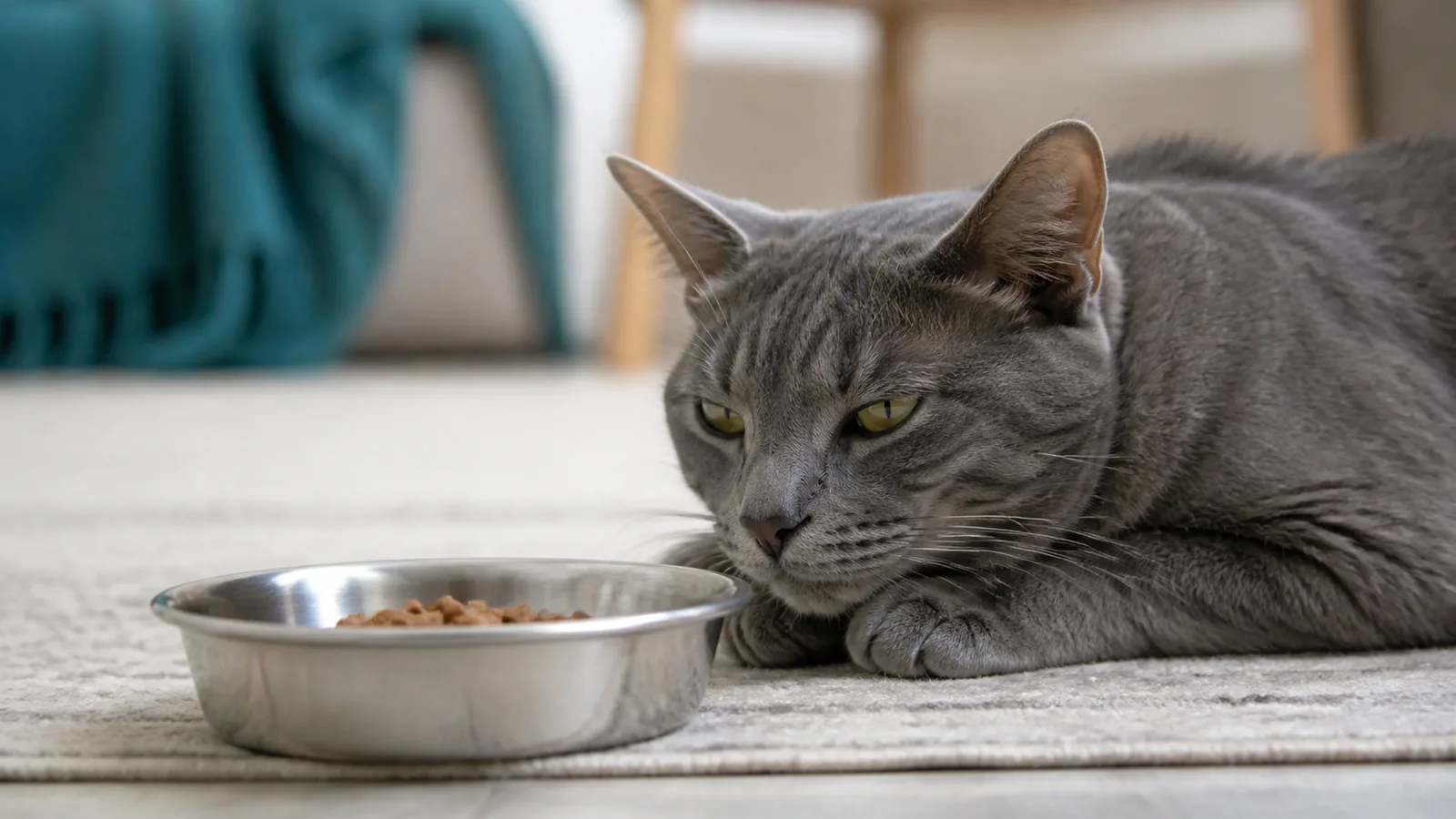
A cat who quietly stops eating is rarely just being fussy, and pancreatitis is one of the more common reasons behind it. The pancreas makes digestive enzymes and helps control blood sugar, and when it becomes inflamed, that irritation spreads into the tissue around it. Dogs show this dramatically, with hard vomiting and obvious belly pain, while cats are quieter about it: extra sleeping, hiding, and smaller meals, sometimes with nothing else you can point to. That is why feline pancreatitis is so often missed at home, and a cat who goes two or three days without eating can develop liver trouble on top of it. Caught early, most cats do well with fluids, pain control, and help getting food back in.
Noah's Ark Veterinary Hospital in Williamsburg, takes a cat who is quietly off their food seriously, because that is often the only sign you get. We run bloodwork and imaging, including a pancreas-specific blood test, and use abdominal ultrasound to sort pancreatitis out from the intestinal, liver, and thyroid disease that looks the same or arrives together in cats. From there we can get your cat comfortable and eating again, and those small shifts in weight and appetite are exactly what wellness exams catch before a problem gets this far. If your cat has turned down meals for more than a day or is hiding away from the family, book an appointment at our AAHA-accredited hospital and we will find out why.
What a Full Bowl Is Telling You
- Cats rarely make a scene about this one, so the whole picture is often just quieter behavior, longer naps, and a bowl that stays full.
- A cat who won't eat for two or three days can develop dangerous liver disease on top of everything else, which is why skipped meals get a phone call rather than a wait.
- Diagnosis takes more than a single test, because the pancreas, liver, and intestine tend to flare together in cats.
- Most cats improve within a few days once they have fluids, pain relief, anti-nausea medication, and a way to get calories back in.
What Is Pancreatitis, and Why Is It Different in Cats?
Pancreatitis happens when the pancreas becomes inflamed and the digestive enzymes it stores start leaking into the tissue around it, which is why a cat with an inflamed pancreas feels sick in ways that look nothing like a digestive problem. That same organ also manages insulin, so one small structure ends up touching a lot.
In dogs, this is loud. In cats, it's a slow fade, and the signs overlap with half a dozen other feline conditions, which is why it goes undiagnosed so often. A cat who is hurting doesn't limp or whine; they go still, tuck under the bed, and stop asking for breakfast.
| What you might be watching for | How dogs usually show it | How cats usually show it |
| Vomiting | Repeated and hard to miss | Mild, occasional, or absent |
| Belly pain | Hunched posture, vocalizing | Hiding, sitting tight, objecting to being lifted |
| Appetite | Refuses food all at once | Eats a little less each day |
| Temperature | Often runs a fever | Often runs cool |
| Trigger | A fatty meal or a garbage raid | Usually nothing identifiable |
Because the shift is so gradual, a baseline helps more than instinct. Routine wellness exams put a real number on your cat's weight, and a half-pound drop on the scale is the kind of evidence that's impossible to gather from the couch.
What Causes Pancreatitis in Cats?
Most feline pancreatitis is idiopathic, meaning no trigger is ever found. When a cause does surface, it's usually another illness already underway rather than the fatty-meal story people know from dogs, and that changes how far a workup has to reach. Here's what tends to sit underneath it:
- Gut and liver disease: In cats, the pancreatic duct and the bile duct empty into the small intestine at nearly the same point, so inflammatory bowel disease and pancreatic inflammation tend to travel together rather than separately. Years of "he's just a pukey cat" often turn out to be part of this picture.
- Endocrine disease: The same organ that makes digestive enzymes also makes insulin, so repeated bouts of inflammation can damage those cells and set the stage for diabetes, and cats already living with it are more likely to develop pancreatic inflammation in turn.
- Trauma and poor blood flow: A fall from a window, a car strike, or a stretch of very low blood pressure during a serious illness can bruise the organ or briefly starve it of circulation.
- Infection: Toxoplasma and a few feline viruses have been linked to pancreatic inflammation, though together they explain only a small slice of cases.
- Metabolic upsets: High blood calcium and significant dehydration can tip an already irritated gland over the edge.
- Dietary indiscretion: A raid on the roasting pan matters less in cats than in dogs, but greasy scraps still land some of them in an exam room.
In-house bloodwork and abdominal ultrasound let us look at the pancreas, liver, and intestinal walls in a single visit, which is the only way to tell which organ is driving the trouble.
What Signs of Pancreatitis Should I Watch For?
Lethargy in a cat is rarely dramatic: three extra hours asleep, a skipped jump onto the counter, and a coat that has gone unkempt because grooming quietly stopped. Pair that with a shrinking appetite and you have the most common way this disease shows up at home.
An occasional hairball gets written off as normal cat behavior, but vomiting that repeats over a day or two, or arrives alongside a cat who has stopped eating, is a reason to call rather than watch. Diarrhea may or may not join in. Dehydration builds fast in a ten-pound body, and it shows up as gums that feel tacky instead of slick, plus a general flatness that's easier to feel than describe.
| What you're seeing | Why it matters | What to do |
| One skipped meal, otherwise normal | Could be stress, heat, or a minor upset | Watch closely and call if the next meal is refused |
| Nothing eaten for 24 hours | The liver starts pulling in fat almost immediately | Call today |
| Repeated vomiting or diarrhea | Fluid losses add up quickly at this size | Call today |
| Hiding, hunched, objects to being picked up | Belly pain | Come in |
| Pale or tacky gums, weakness, cold ears | Dehydration or shock | Emergency, go now |
For a cat who has crossed from "a bit quiet" into obviously unwell, our team provides urgent care during our open hours, and it's always fine to call and describe what you're seeing before you decide.
Why Does Feline Pancreatitis Need Attention Quickly?
A cat who stops eating for just a few days can develop hepatic lipidosis, a liver condition that often becomes the larger emergency, and that is precisely why appetite loss in cats never justifies a wait-and-see approach. Untreated inflammation also gets harder to settle the longer it runs.
Fluid losses turn into serious dehydration, which drops blood flow to the kidneys. Damaged insulin-producing cells can leave a cat diabetic afterward. In severe cases, bacteria and inflammatory chemicals spill into the bloodstream and the whole body goes into crisis. None of that is likely when a cat is seen early, which is why we'd rather look at a cat who turns out to be fine.
One warning worth putting plainly: never give your cat human pain relievers. Acetaminophen and ibuprofen are toxic to cats, and a single tablet can be fatal. Skip the internet remedies too, and don't try to force-feed a nauseated cat with a syringe, since that usually ends in a stressed cat, an inhaled mouthful, and no calories. Don't rest the gut by withholding food the way you might with a dog either, because a fasting cat is exactly the setup for liver trouble. If you're unsure whether what you're seeing warrants a trip, call us and we'll help you sort it out over the phone first.
How Do Veterinarians Diagnose Pancreatitis in Cats?
Bloodwork and imaging deliberately look past the pancreas itself, because cats often have triaditis: inflammation of the pancreas, liver, and intestine all at once. Finding one problem never rules out the other two.
A feline pancreatic lipase test is the closest thing to a direct answer, while a chemistry panel and blood count show how the liver, kidneys, blood sugar, and hydration are holding up. Older cats usually get a thyroid value added, since hyperthyroidism mimics much of this. Ultrasound supplies the picture: a swollen, darkened gland, free fluid nearby, thickened intestinal walls. If there's fluid worth sampling, cytology under the microscope can rule an infection in or out.
A clean scan doesn't clear a cat, especially with the low-grade chronic form, and no single number settles the question by itself. So our veterinarians read the whole story at once: what you've noticed at home, what the exam finds, what the numbers say, and how your cat responds to the first day of treatment.
How Is Feline Pancreatitis Treated?
No medication switches pancreatic inflammation off, so treatment supports your cat while their body settles down: fluids to correct dehydration, relief from pain and nausea, and calories in whatever form they'll accept. Most cats start to turn a corner within a few days of steady care.
Cats needing IV fluids spend the day with our team, where we can follow hydration, comfort, blood pressure, and whether food is staying put. We don't keep patients overnight, so a cat who needs continuous nursing goes to a nearby emergency hospital and we arrange that transfer ourselves. Pain management isn't a nicety here either, because an inflamed abdomen genuinely hurts and a comfortable cat eats sooner.
Nutrition is the piece families worry about most. When a cat refuses food long enough that nutrition becomes the limiting factor in recovery, feeding tubes deliver calories and medication with far less stress than force-feeding. Most cats keep one only until their appetite comes back, and they tolerate them far better than the idea sounds.
Mild cases often improve in two to four days, while chronic or severe ones need longer support and recheck visits. Whatever sits underneath, whether that's intestinal disease or a hormone problem, gets treated alongside the flare, because leaving it alone is how cats end up back in the same spot a few months later.
Can I Prevent Pancreatitis in My Cat?
Not entirely, since so many cases arrive without explanation. Three things still move the odds in your favor:
- Feed one consistent food: A consistent, complete balanced diet matched to your cat's life stage does more for the pancreas than any supplement or rotating menu of novelty foods. When a change is needed, make it over a week or so rather than overnight.
- Keep the dinner table off-limits: Turkey skin, bacon grease, and a saucer of gravy are the scraps that land cats in an exam room, so keep the table and counters clear when no one is around and don’t feed your cat from your own dinner plate.
- Work toward a lean weight: Extra body fat is metabolically active tissue that keeps low-grade inflammation simmering, so healthy weight management done slowly, on the order of half a pound a month, lowers risk without triggering the kind of fasting that puts the liver in danger.
Twice-yearly weigh-ins and nutrition counseling catch the creep nobody notices at home, and they're where we settle which treats fit the Williamsburg cat who is convinced they're starving at five in the morning. Chronic vomiting deserves a look too, rather than a shrug.
What Cat Families Ask Us About Pancreatitis
Is my cat in pain if they aren't crying or limping?
Very likely, yes. Cats hide discomfort as a survival habit, and belly pain shows up as posture and behavior instead of noise: sitting hunched with feet tucked, choosing a closet over the couch, tensing or turning when you scoop them up. A cat who used to sleep on your chest and now sleeps behind the dryer is telling you something. Pain relief is a standard part of treatment, and it's often what gets a cat interested in food again.
Will my cat need a prescription diet for life?
Usually not. Many cats go back to their regular complete food once the flare resolves, especially when nothing chronic is found underneath. A cat with inflammatory bowel disease or diabetes in the mix may do better on a specific diet long term, and that's a decision we make together based on what the workup shows and what your cat will reliably eat. A perfect food your cat refuses helps nobody.
Can pancreatitis come back after my cat recovers?
It can. The chronic form waxes and wanes, and some cats have several mild episodes over the years. That's not a reason for gloom, it's a reason to know your cat's normal, since families who catch the second episode on day one have a far easier week than families who catch it on day four. Keep an eye on appetite and weight, and treat any underlying disease consistently to lengthen the quiet stretches.
Getting Your Cat Back to the Food Bowl
A cat who quietly stops eating is one of the harder things to read at home, and second-guessing yourself over it is normal. Pancreatitis is serious, but it's also one of the more fixable answers when it's found in the first few days, and most cats go home comfortable and eating. Noah's Ark Veterinary Hospital is open Monday through Friday and Saturday mornings, and we handle emergencies while our doors are open, so bring us your worry along with your cat.
If meals have gone untouched or your cat has been hiding, schedule an appointment or give us a call, and we'll work out what's behind it together.