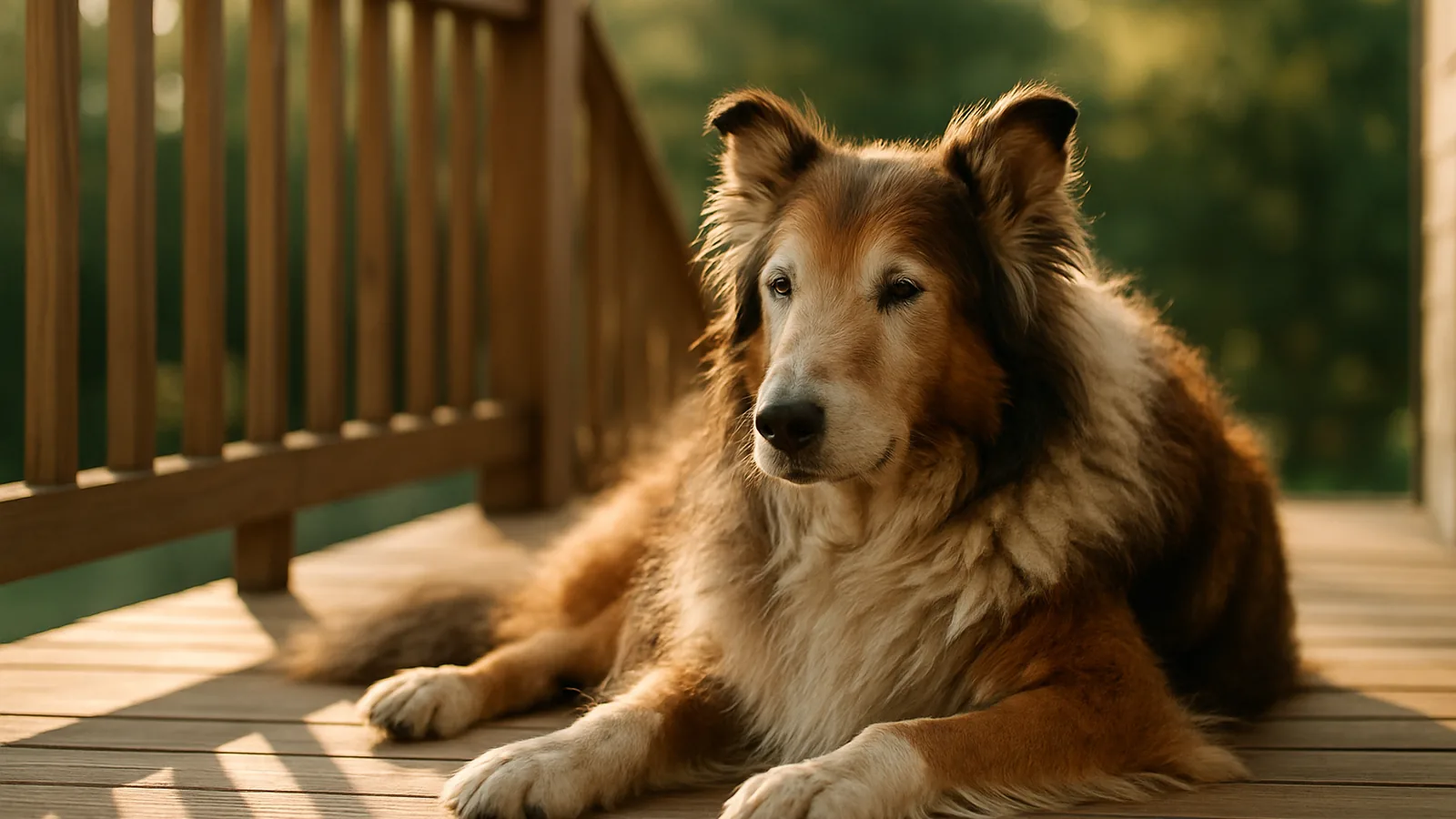
Watching your dog bump a doorframe, or calling a cat who no longer turns toward your voice, is a quietly heartbreaking moment, and the first question most families ask is whether their pet can still be happy. The honest answer is yes: most dogs and cats handle losing sight or hearing far better than the people who love them do. They lean on scent, touch, vibration, and a memorized map of the house, and with a stable home and a real diagnosis behind the change, they keep eating, playing, and meeting you at the door. What they need most from you is consistency, and a veterinary team that figures out why the change happened in the first place.
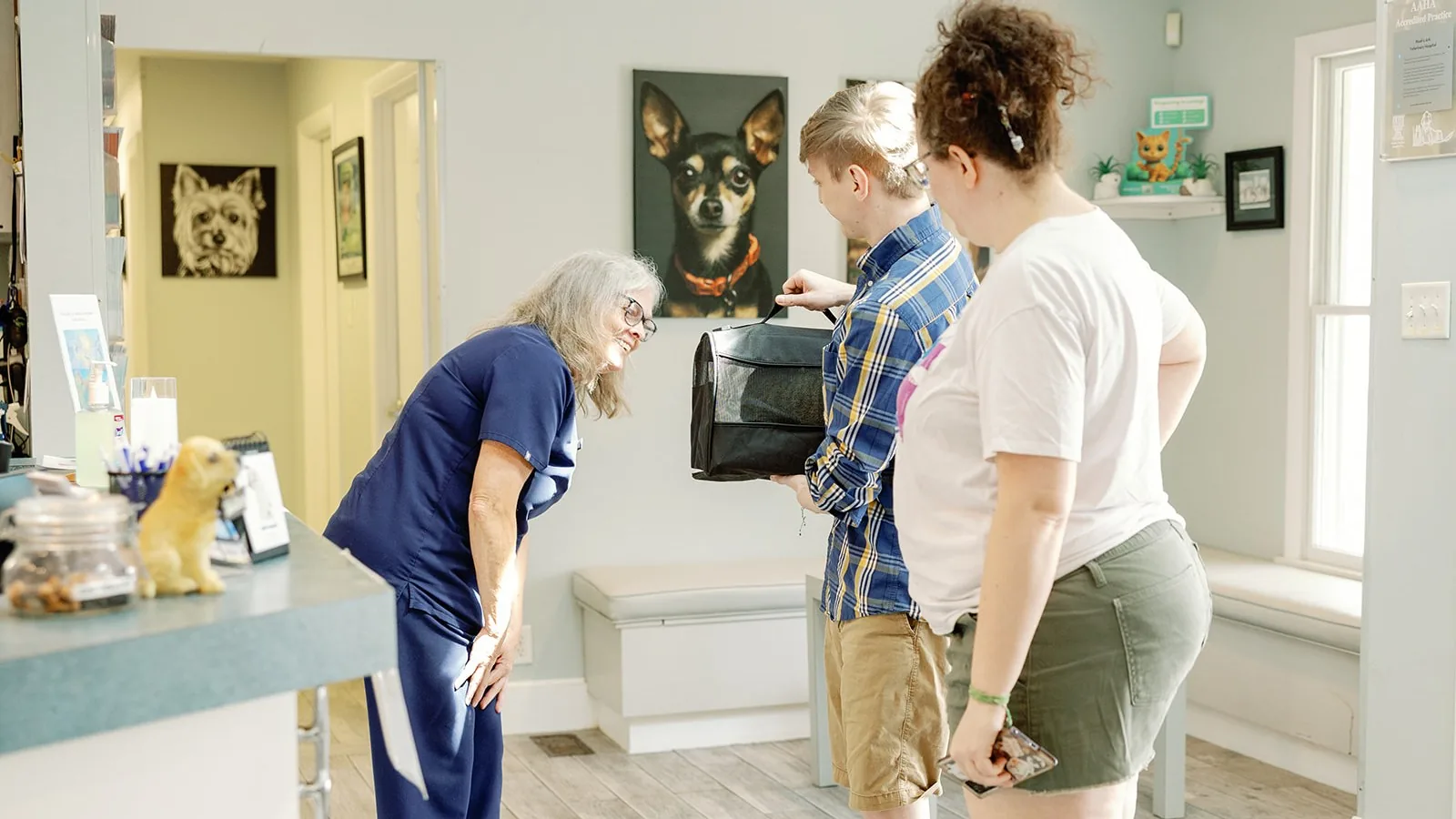
At Noah's Ark Veterinary Hospital in Williamsburg, we catch many of these changes during a routine wellness exam, and just as often a client mentions their dog has started hesitating at the back steps or their cat has stopped jumping to the windowsill. Either way, we can start looking for a cause the same day using in-house blood work, a blood pressure reading, and digital imaging, which matters because some causes of sudden blindness have a treatment window measured in days. If you've noticed a change in how your pet sees, hears, or moves through the house, request an appointment and we'll help you figure out what's going on and what to do about it.
Caring for a Blind or Deaf Pet at a Glance
- Deaf and blind pets can still be happy: Loss of a sense is hard at first, but these pets often adapt quickly and learn how to engage with their families and surroundings in a new way.
- Speed of onset drives urgency: Sight or hearing that vanishes over a weekend needs same-day attention. A slow slide over a year can wait for a regular visit.
- The house does most of the work: Furniture that stays put, non-slip footing, and predictable routines let a sensory-impaired pet move with confidence.
- These pets are still trainable: Touch cues, hand signals, and scent markers take over the job sight or sound used to do.
What Causes Sudden or Gradual Blindness in Dogs and Cats?
Vision loss in dogs and cats usually traces back to cataracts, retinal degeneration or detachment, glaucoma, optic nerve disease, or high blood pressure. Some of these creep in over months and some arrive overnight. Figuring out which one you're dealing with changes the treatment, the urgency, and what you can expect a year from now.
| Cause | Typical onset | How it causes blindness | Good to know |
| Cataracts | Months, or weeks in diabetic dogs | The lens turns opaque, light stops reaching the retina | Surgery can restore vision for some dogs |
| Glaucoma | Gradual, or over a single day | Fluid pressure in the eye builds and crushes the optic nerve | Painful; sudden cases are true emergencies |
| Progressive retinal atrophy | Night blindness first, then gradual | Genetic mutation causes gradual loss of healthy retinal cells | Not painful; runs in certain breeds |
| Sudden Acquired Retinal Degeneration | Sudden, over days to weeks | Death of retinal cells, likely from immune-mediated disease but true cause is unknown | Comes with increased thirst and urination |
| Retinal detachment | Often sudden | Various causes from trauma to systemic illnesses | Usually high blood pressure in cats; treatable if caught early |
An eye that is both blind and painful is often best removed, a surgery called enucleation. That sounds drastic, yet pets with one eye, or none at all, do remarkably well, and families consistently tell us their dog or cat seemed years younger once the constant ache was gone.
Why Do Dogs and Cats Lose Their Hearing?
Hearing loss comes from a short list of sources: congenital deafness tied to certain breeds and coat patterns, age-related changes deep in the inner ear, chronic ear infections that scar the canal or eardrum, and neurologic disease. In senior pets, cognitive changes can also dull how a dog or cat processes sound.
Born Deaf: Breeds and Coat Colors
Congenital deafness follows the genes behind white coats and blue eyes. Dalmatians, Australian Shepherds, Catahoulas, and white cats with blue eyes carry a higher risk, and a puppy or kitten can be deaf in one ear or both. One-sided deafness slips by easily, since the pet still turns toward noise, just not from the right direction.
Hearing That Fades With Age or Infection
Age-related loss is the form we see most, and it's gradual. High frequencies go first, and a fourteen-year-old Beagle who ignores her name may still wake for the refrigerator door. Chronic ear infections cause years of inflammation that thicken the canal and scar the eardrum, and for some pets the ear cleaners or medications themselves cause hearing loss.
When the Brain Is Part of It
There's also overlap with the brain. Cognitive dysfunction changes how sound gets processed, not whether it gets heard. A pet who paces at night or seems slow to recognize you may have both, which is why we work these up as part of senior wellness care for dogs and cats rather than treating hearing as an isolated finding.
What Are the First Signs My Pet Is Losing Sight or Hearing?
Early signs are small and easy to explain away: bumping a doorframe in dim light, hesitating at stairs, sleeping through the doorbell, startling at your touch. Pets compensate so well in familiar rooms that the change often surfaces first on vacation, in a new house, or after you move the couch.
| What you're noticing | What it often points to |
| Misses tossed treats, bumps things in dim light | Fading vision |
| Refuses stairs, misses jumps, stays off the counter | Fading vision; cats hide it longest |
| Pupils stay wide in bright light | A vision problem worth a same-day call |
| Sleeps through the doorbell or your arrival | Hearing loss |
| Recall stopped working, barking gets louder | Hearing loss |
| Startles hard at a touch they didn't see coming | Either one, or both together |
A dog who tracks you by sound instead of sight, or a cat navigating by feel along the baseboards, has usually been compensating for a while, which is exactly why an exam is worth scheduling before the signs are dramatic.
How Do Veterinarians Diagnose Vision and Hearing Loss?
A workup starts with a full eye exam that checks pupil responses, menace response, and the retina itself, plus a fluorescein stain if the surface of the eye looks painful. Blood pressure, in-house blood work, and imaging fill in the systemic picture. For hearing, we begin with an otoscopic exam and a search for infection or obstruction.
From there, the workup moves in a logical order:
- Examine the eyes and ears directly. Pupils that don't respond to light point toward the retina or the optic nerve, while pupils that react normally in a blind pet point toward the brain. In the ears, we look for the infection, debris, or scarring that can be treated.
- Check blood pressure and run blood work. A pressure reading catches the hypertension behind many detached retinas, and blood work with a thyroid panel catches diabetes, kidney disease, and hyperthyroidism.
- Image when the answer is deeper. When we suspect trouble beyond the eye or ear, our imaging and diagnostics help us find it.
- Refer when the answer must be definitive. Formal BAER testing, which records the brain's response to sound, happens at a referral center, and we'll arrange it, along with an ophthalmology referral, when it's needed.
When sight disappears quickly, this process becomes a race, since some causes have a treatment window measured in days. Hearing is harder to measure in an exam room, because a pet who feels footsteps through the floor looks exactly like one who hears them, which is why BAER testing exists.
How Should I Change My Home for a Blind or Deaf Pet?
Living with a blind or deaf pet means creating a predictable environment they can memorize. Furniture stays put, bowls stay in the same spot, and hazards get blocked before your pet finds them. Footing, lighting, and how you announce yourself do more for confidence than anything you can buy.
For Vision Loss
- Leave the layout alone: Keep furniture, bowls, and litter boxes where they are, and warn houseguests not to rearrange anything.
- Add lighting: For pets that still have some vision, nightlights can help them navigate better in the dark.
- Block the drop-offs: Baby gates at stairs, a barrier around water, and padding on sharp corners prevent most injuries.
- Give the floor texture: A runner at the top of the stairs becomes a landmark your pet can feel, and mulch or gravel next to fence lines helps them map the edges of a yard.
- Add scent landmarks: A dab of a pet-safe scent near a doorway or the top of the stairs gives your pet one more way to place themselves. Allow cats to scent mark along the walls and doorframes, and resist the urge to scrub it off so they can use it as a landmark.
- Pick toys that talk back: Toys with bells, crinkles, or strong smells keep play alive for a pet who can't track a silent ball.
- Consider a halo harness: A lightweight hoop that rides just ahead of the face bumps obstacles before your dog does, protecting the eyes and nose while a newly blind dog relearns the house.
For Hearing Loss
- Trade sound for vibration and light: A tap on the floor, a flashlight flick, or a vibration collar, which is not a shock collar, becomes your recall.
- Approach in view: Walk around into their line of sight before touching, and wake them with a gentle hand on the shoulder or short vibration rather than a voice they can't hear.
- Keep them leashed outside: A deaf dog can't hear a car, a bike, or you calling, so fences and leashes stop being optional.
Both groups need the same foundation: non-slip surfaces, a steady routine, gentle wake-ups instead of surprise touches, and enrichment that runs through nose and mouth. Families adjusting to deafness can find excellent training help through Deaf Dogs Rock, and Muffin's Halo publishes practical articles on daily life with a blind dog. We're glad to walk through your floor plan and tell you what we'd change first.
Can a Blind or Deaf Pet Still Learn New Cues?
Blind and deaf pets learn as well as any other pet, because training relies on consistent signals and clear rewards rather than on one particular sense. You're swapping channels, not lowering expectations. Deaf dogs work beautifully off hand signals, and blind dogs work off voice, touch, and scent, often faster than people expect.
Whatever the impairment, positive reinforcement training is the approach to build on. Punishment is the wrong tool for any dog, and it's especially unfair to one who never saw or heard the correction coming; rewards for the choices you want are what build confidence in a pet already working harder than most to read the world.
Hand Signals and Check-Ins for Deaf Dogs
Pick clear hand signals and stay rigid about them. Signs from American Sign Language work well, and so do ones you invent, as long as everyone in the house uses the same set. Use your face on purpose too, since deaf dogs become remarkably sharp readers of human expression and emotion. Vibration collars can also be useful for getting their attention so they know to look to you for a hand signal. Teach a check-in habit early by rewarding your dog every time they turn to find you, because a deaf dog who checks in is a dog you can work with anywhere.
Voice and Touch for Blind Dogs
For a blind dog, narrate. Say "step" before a curb and "wall" before a turn, using the same words in the same places until they become landmarks. Touch cues help with steering: a tap on one shoulder for a turn, or a finger trailed along the back for reassurance. Go slower than feels necessary, and reward any voluntary exploring rather than waiting for perfect responses. Puppies and kittens born without sight or hearing adapt fastest of all, since this is simply the world they know. If a pet turns fearful as their senses fade, behavior support is part of the care we provide, and stepping in early keeps the fear from settling in.
Can a Blind or Deaf Pet Have a Good Quality of Life?
Sensory loss by itself doesn't lower quality of life much, and most dogs and cats settle into a new normal within a few weeks. What drives quality of life is pain, appetite, mobility, continence, and whether your pet still engages with the people and routines they love. Sight and hearing are conveniences; those five are the substance.
The hard part is often yours, not your pet's. Grief for the dog who used to catch a frisbee is real, and so is a month spent worrying about the stairs. Your pet, meanwhile, is busy re-learning the hallway.
Watch observable markers rather than mood: eating well, sleeping normally, moving through the house without freezing, greeting you, using the litter box or asking to go out. A structured quality of life scale helps when sensory loss layers onto arthritis or kidney disease and you want something steadier than a gut feeling. When those markers slip and treatment no longer keeps your pet comfortable, it's fair to talk with us about adjusting goals, including end-of-life and comfort care.
Common Questions About Blind and Deaf Pets
My dog's eyes look cloudy. Is that a cataract?
Not necessarily. Bluish haze in the center of the lens in a dog over eight is usually nuclear sclerosis, a normal aging change that barely affects vision. A dense white opacity that blocks our view of the retina is more likely a cataract. One exam settles it.
Can a deaf dog ever be off leash?
In a securely fenced yard, yes. Outside a fence, no. A deaf dog can't hear a car, a shouted recall, or another dog approaching, and a check-in habit won't cover that gap. Long lines give freedom on trails without giving up control.
Will my pet's other senses get stronger?
Their senses don't sharpen, but their use of them does. A blind dog learns to read air currents, floor texture, and scent trails with real precision, and a deaf cat becomes tuned to vibration. That's learned skill, which is why consistency at home speeds it up. We're happy to talk through the questions that come up as you adjust, so reach out whenever something new appears.
Getting a Clear Answer About Your Pet's Senses
A pet who can't see or hear well can still have a full, busy, deeply ordinary life. What they need from you is a diagnosis, a house that stays predictable, and attention to their comfort as they age. The rest they'll work out on their own.
If you've noticed cloudiness, hesitation on stairs, a recall that stopped working, or a cat who's staying on the floor, we'd like to take a look. Schedule an exam with us at Noah's Ark Veterinary Hospital in Williamsburg for a full workup, or fold the question into your pet's next wellness visit. Sudden changes should be seen the day they happen, so call us right away.