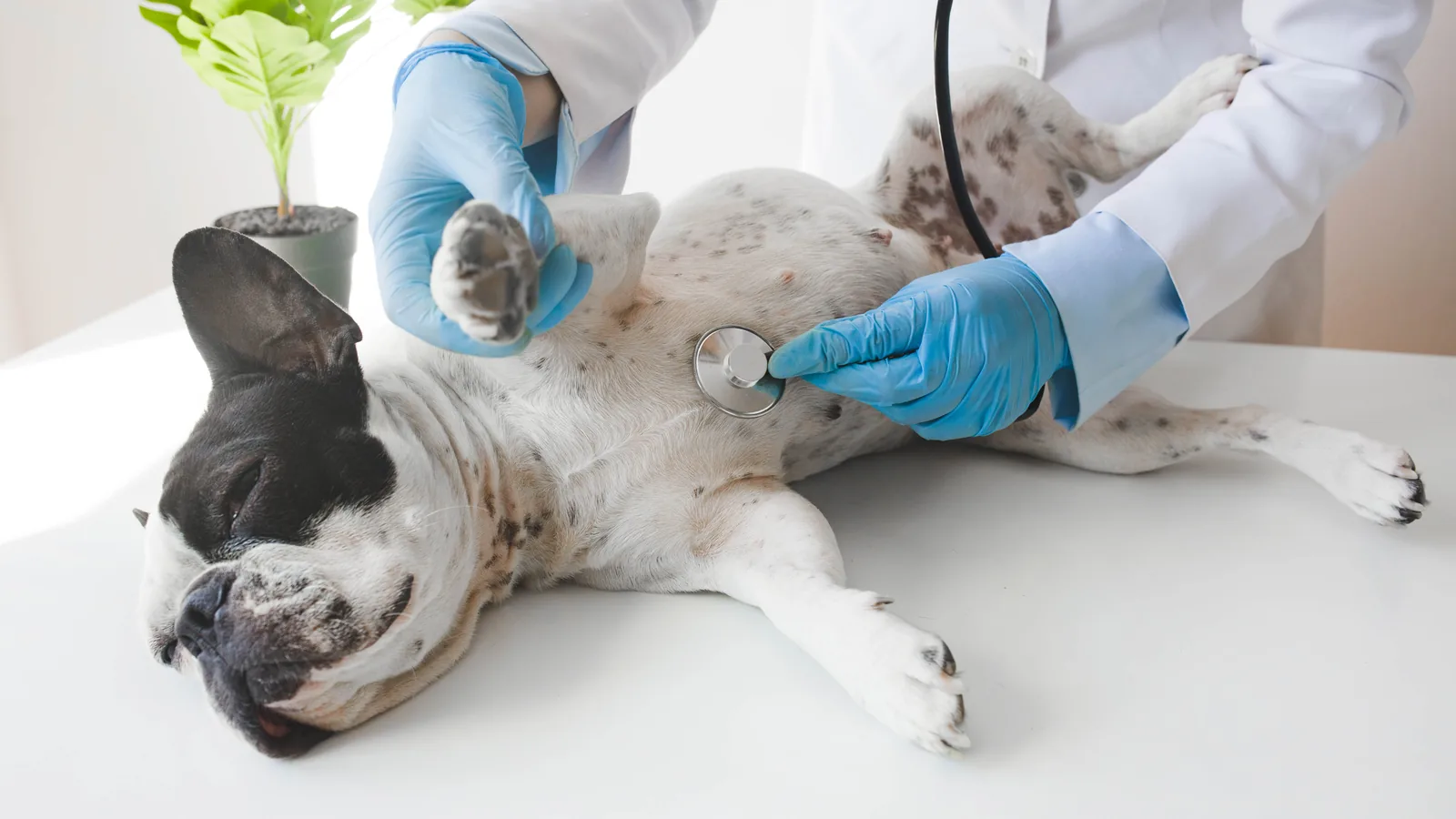
Heart disease in dogs is more common than many families realize, particularly in middle-aged and senior dogs and in breeds with known cardiac predispositions. The two most frequent forms are mitral valve degeneration (the typical small-breed heart disease, where the valve between the upper and lower left chambers gradually fails) and dilated cardiomyopathy (DCM, the typical large-breed heart disease, where the heart muscle weakens and chambers enlarge). Early detection matters because both conditions have effective treatments that meaningfully extend comfortable life when started before the dog is in congestive heart failure. If your dog has a new soft cough, is tiring out on walks, or seems restless at night, that is worth a cardiac workup rather than chalking it up to age.
At Noah's Ark Veterinary Hospital in Williamsburg, our team works through the evaluation from initial physical exam and bloodwork through chest radiographs, EKG, and cardiac ultrasound right here in the hospital. Our in-house diagnostics include digital X-ray, cardiac ultrasound, and EKG, with referral to a board-certified cardiologist when specialty input is appropriate. We are AAHA accredited, which sets the bar for the diagnostic and treatment standards cardiac cases deserve. If you have noticed a cough, reduced stamina, or other changes that concern you, reach out to schedule an evaluation.
Canine Heart Disease Snapshot
- Two dominant forms: mitral valve disease is the most common heart disease in small breeds, and dilated cardiomyopathy (DCM) is the most common in large breeds.
- Early signs are subtle: a soft cough, exercise intolerance, and increased resting respiratory rate are often dismissed as aging.
- Diagnosis is layered: physical exam, chest X-rays, bloodwork (including cardiac biomarkers), EKG, and echocardiogram.
- Early treatment extends life: medical management started before congestive heart failure substantially extends quality life expectancy.
What Are the Main Types of Heart Disease in Dogs?
Most canine heart disease falls into four buckets: valve problems, heart muscle problems, rhythm problems, and defects a dog is born with. The two most common acquired forms split along size lines, with leaky mitral valves dominating in small breeds and dilated cardiomyopathy in large ones. Here is how the categories break down:
- Valvular disease: degeneration of one or more heart valves, most commonly the mitral valve, which becomes thickened and leaky so blood flows backward and forces the heart to work harder.
- Myocardial disease: problems with the heart muscle itself, including dilated cardiomyopathy (chambers enlarge, muscle weakens) and hypertrophic forms (less common in dogs than cats).
- Arrhythmic disorders: abnormal heart rhythms that may occur with or without structural disease.
- Congenital heart defects: present from birth (patent ductus arteriosus, pulmonic stenosis, and others).
The two most common acquired forms break down along size lines:
| Feature | Mitral valve disease | Dilated cardiomyopathy (DCM) |
| Typical patient | Small breeds | Large and giant breeds |
| Mechanism | Valve thickens and leaks; blood flows backward | Heart muscle weakens; chambers enlarge |
| Over-represented breeds | Cavalier King Charles Spaniels, Chihuahuas, Yorkshire Terriers, Maltese, Dachshunds, Toy Poodles | Doberman Pinschers, Boxers, Great Danes, Irish Wolfhounds |
| Diet connection | Not a primary factor | Under active investigation (certain grain-free diets) |
Mitral valve disease is the single most common heart disease in dogs, particularly small breeds, and progression varies: some dogs have valve thickening detected on exam for years before symptoms develop, while others progress more rapidly. Dilated cardiomyopathy primarily affects large and giant breeds, and the dietary connection to grain-free diets has been an active area of investigation, with dogs on certain grain-free formulations identified at higher DCM risk in some populations.
Risk factors for heart disease in general:
- Age: most acquired heart disease appears in middle age or later.
- Breed and size: strong breed predispositions for both mitral valve disease and DCM.
- Genetics: heritable components for many forms.
- Diet: particularly relevant for non-traditional diets and DCM.
- Other systemic disease: hyperthyroidism, hypertension, and kidney disease all affect cardiac workload.
Knowing a breed's breed-specific health risks helps guide screening and care planning, particularly for breeds with established cardiac predispositions.
What Are the Early Signs of Heart Disease?
The earliest signs are quiet and easy to write off as aging: a little less stamina, a soft cough that shows up at night, faster breathing at rest. Heart disease rarely announces itself dramatically at first, which is exactly why these small changes are worth noticing. The signs worth watching for:
- Reduced exercise tolerance: slowing down on walks, needing more rest breaks, reluctance to play as long.
- New or persistent coughing: often soft, often worse at night or when lying down.
- Increased resting respiratory rate: normal is below 30 breaths per minute when relaxed at rest.
- Fainting or collapse episodes: especially with exertion or excitement.
- Increased restlessness at night: difficulty getting comfortable, repositioning frequently.
- Decreased appetite.
- Abdominal distension: can indicate fluid accumulation.
- Pale or bluish gums.
Patterns matter more than isolated events. A single restless night or one episode of slowing down on a walk does not confirm heart disease, but a pattern over weeks, especially if multiple signs cluster, warrants evaluation. A few signs warrant same-day evaluation: labored breathing at rest, blue gums, collapse, or sudden severe exercise intolerance, the kind of respiratory distress that cannot wait. If you are watching a pattern develop and want a professional eye on it, you can request an appointment and we will work through it with you.
How Is Heart Disease Diagnosed in Dogs?
Diagnosing heart disease is a layered process rather than a single test. We start with a physical exam and what we hear through the stethoscope, then build out the picture with imaging, bloodwork, and rhythm and structural studies as needed. A typical heart disease workup moves through these steps:
- History and physical exam. Symptoms, breed, age, and findings on auscultation. A heart murmur is often the first objective finding.
- Chest radiographs. Evaluate heart size and shape, look for fluid in the lungs, and identify pulmonary vascular changes.
- Bloodwork. A general health screen plus cardiac biomarkers (NT-proBNP) that indicate cardiac stretch and stress.
- Blood pressure measurement. Hypertension contributes to cardiac strain.
- EKG. Traces the heart's electrical signals to flag abnormal rhythms.
- Echocardiogram. Ultrasound of the heart, the gold standard for diagnosing structural cardiac disease, evaluating chamber sizes, valve function, and contractility.
Our in-house imaging and lab work support the cardiac workup, and we coordinate with cardiology specialists when complex cases warrant board-certified input. Results inform staging (how advanced the disease is) and monitoring intervals (how often to recheck).
How Is Canine Heart Disease Treated?
Treatment depends on which condition your dog has and how far along it is, but the goal is consistent: help the heart pump efficiently, keep fluid from backing up, and protect quality of life for as long as possible. Most plans combine medication with some practical home care. The common cardiac medications:
- Pimobendan: an inotrope and vasodilator, the cornerstone of treatment for mitral valve disease and DCM, started before congestive heart failure in select cases and continued through later stages.
- Diuretics (furosemide, torsemide): manage fluid accumulation in congestive heart failure.
- ACE inhibitors (enalapril, benazepril): reduce cardiac workload.
- Spironolactone: an aldosterone blocker often added in advanced disease.
- Antiarrhythmics: when specific arrhythmias are identified.
Treating congestive heart failure usually means layering several of these medications together, and most cardiac patients end up on a few at once, with doses fine-tuned over time based on how your dog responds. Alongside medication, home care carries real weight:
- Nutrition: reduced-sodium diets for advanced disease and specific feeding strategies for cardiac patients.
- Exercise management: maintaining moderate activity without overexertion, avoiding heat and strenuous play.
- Stress reduction: reducing anxiety and unnecessary stressors.
- Ongoing monitoring: especially recording resting respiratory rate, since a sustained increase in resting breaths per minute is one of the earliest signs of decompensation.
Home monitoring of resting respiratory rate is one of the highest-impact things you can do. Count breaths per minute when the dog is sleeping or relaxed; a consistent increase above 30 (or the dog's individual baseline plus 20%) warrants a call. Ask us at your next appointment, and we’ll happily teach you how.
How Often Should a Dog With Heart Disease Be Monitored?
How often a dog needs rechecks depends on where they are with the disease, ranging from once or twice a year for early, stable cases to as often as monthly during active medication adjustments. Predisposed breeds and seniors benefit from cardiac screening at routine visits even before any diagnosis, and preventive testing for senior pets folds heart checks into that care. For dogs with diagnosed heart disease, recheck frequency depends on stage:
| Disease stage | Recheck frequency |
| Asymptomatic (early stage) | Every 6 to 12 months |
| Treated, stable disease | Every 3 to 6 months |
| Recently changed medication or new symptoms | 2 to 4 weeks after the change |
| Advanced disease | As often as monthly during periods of adjustment |
What to expect at follow-ups: a weight check, comparison of exam findings, repeat chest radiographs or echocardiogram on a schedule, bloodwork to monitor organ function and electrolytes (particularly if on diuretics), and discussion of home monitoring data. Our wellness and preventive care folds cardiac screening into the regular cadence of senior visits, so the heart gets the same attention as the bloodwork and the joints.
What Complications Can Develop With Heart Disease?
As heart disease advances, the strain can ripple out to other systems. The most common complication is congestive heart failure, where fluid backs up into the lungs or belly, but rhythm disturbances, lung-pressure problems, and effects on the kidneys can all develop too. The ones we watch for:
- Congestive heart failure: the clinical syndrome of fluid accumulation when the heart can no longer compensate, which may affect the lungs (pulmonary edema), abdomen (ascites), or both.
- Pulmonary hypertension: increased pressure in the pulmonary circulation, which can develop alongside or independent of other cardiac disease.
- Arrhythmias: both as primary problems and as complications of structural disease.
- Kidney function changes: reduced cardiac output affects kidney perfusion, and diuretic use also affects kidney values.
When complications come up, we work through additional diagnostics and sometimes loop in a specialist to guide the next steps.
Frequently Asked Questions About Heart Disease in Dogs
My vet heard a murmur. Does my dog have heart disease?
Not necessarily. A murmur is a sound; it can indicate a valve abnormality, a congenital defect, or in some cases a benign physiologic finding. The follow-up workup (radiographs, sometimes echocardiogram) determines what the murmur represents and whether treatment is needed.
My dog is on heart medication. How long can they live?
Quality and length of life with treated heart disease vary substantially based on the specific condition, stage at diagnosis, response to treatment, and individual factors. Many dogs with treated mitral valve disease live good years after diagnosis; DCM has more variable outcomes depending on the underlying cause and stage. We talk through what is realistic for your specific dog as part of every cardiac care plan.
How often should I count my dog's resting breaths?
For dogs with diagnosed cardiac disease or those at higher risk, daily counts when the dog is sleeping or resting calmly. Normal is below 30 breaths per minute; consistent counts above that level, or a sustained increase over baseline, warrant a call.
Is grain-free food really linked to heart disease?
The connection between certain grain-free or boutique diets and DCM in dogs has been investigated for several years, and the FDA has flagged it as an area of concern. We discuss diet specifically as part of cardiac evaluation; the relationship is not fully understood, but enough evidence exists to warrant dietary review in DCM cases.
Can heart disease be prevented?
For some breeds with strong genetic predispositions, complete prevention is not realistic. What can be done: maintain a healthy weight, provide consistent moderate exercise, feed an appropriate diet, manage other systemic conditions, and stay current with wellness visits that include cardiac assessment. Early detection and treatment substantially change outcomes.
Taking Action for Your Dog's Heart Health
Early recognition, timely diagnostics, and individualized treatment plans make a real difference for dogs with heart disease. The strongest long-term outcomes come from noticing changes early, getting a thorough workup done promptly, and committing to consistent monitoring and treatment as the disease evolves. If you have noticed coughing, reduced exercise tolerance, or other concerning signs in your dog, contact us to schedule a cardiac evaluation, and we will walk through the workup and the plan together.