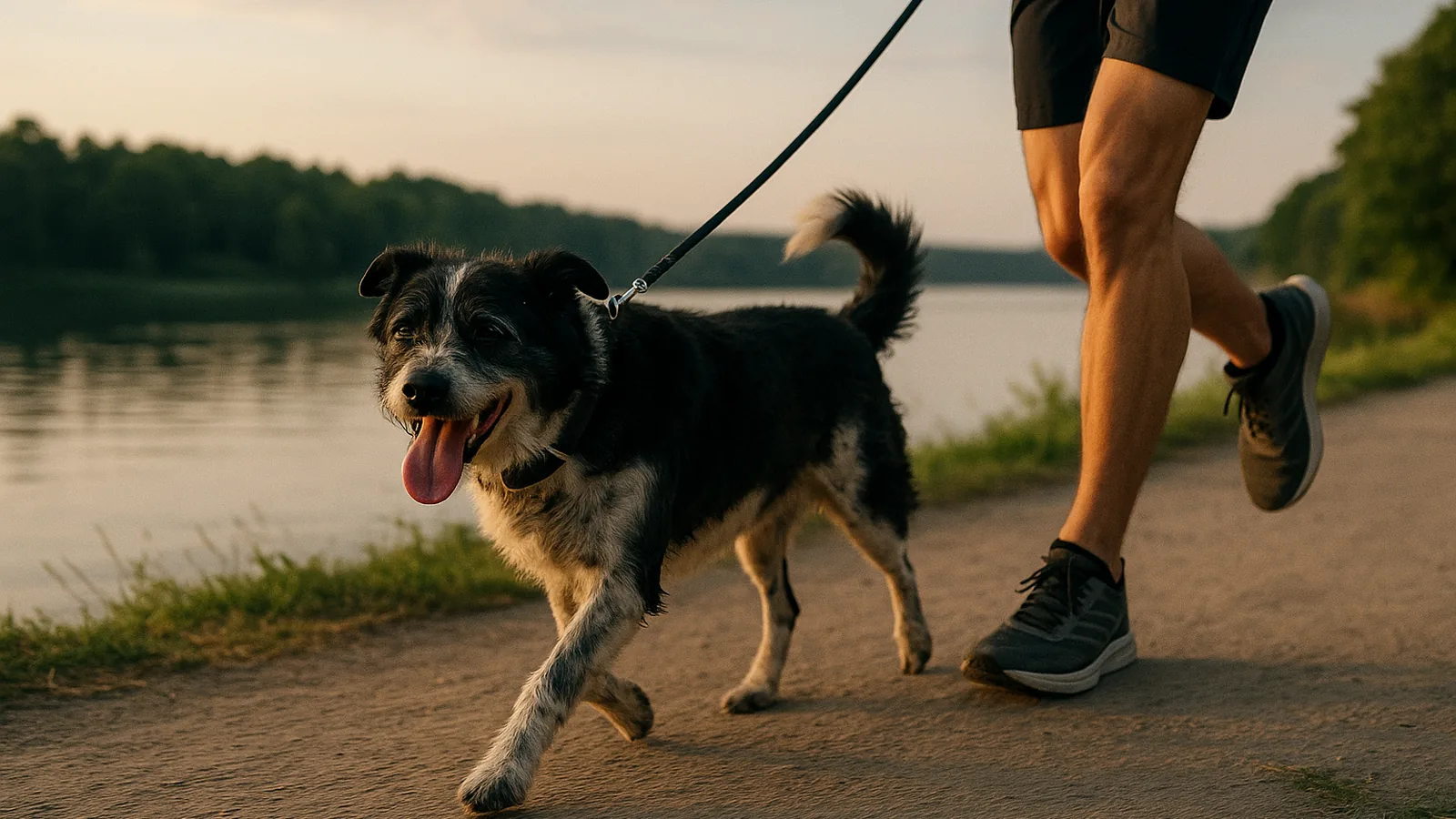
A dog who lunges, barks, and pulls at the sight of another dog is usually reactive, not aggressive, and that difference matters for how you help them. Leash reactivity is an over-the-top response to a trigger, and it is most often rooted in fear, frustration, or plain overexcitement rather than a desire to do harm. Reading your dog's body language early, the stiff posture, the fixed stare, the raised hackles, tells you a lot about what is driving the reaction. The reassuring part is that reactivity is a well-understood behavior pattern that tends to improve with the right mix of training and, when needed, support from your veterinarian.
Noah's Ark Veterinary Hospital in Williamsburg looks at reactivity the way we look at any health concern, as something to understand rather than just manage. We can rule out pain or medical issues that make a dog quicker to react, talk through behavior and training strategies that fit your dog, and point you toward trusted dog training and behavior resources to build on at home. As an independently owned practice, we treat you and your dog as individuals with your own goals and challenges, and we want to be a real partner in working through this. If your walks have become stressful, request an appointment and let us help you find a calmer path forward.
The Essentials on Reactive Dogs
- Reactivity is an over-response to a trigger driven by fear, frustration, or excitement, and it is a different thing from true aggression that is meant to cause harm.
- Pain and hidden medical problems can shorten a dog's fuse, so a health check is a smart first step before you assume the behavior is purely psychological.
- Lasting change comes from shifting how your dog feels about a trigger through desensitization and reward-based training, not from punishing the outburst in the moment.
- Progress is usually gradual, and small wins add up, so patience and a consistent plan matter more than any single perfect walk.
What Does Reactivity Actually Look Like in Dogs?
Reactivity is an outsized response to something in the environment, another dog, a stranger, a skateboard, a doorbell, where the reaction is far bigger than the situation calls for. It is fueled by emotion, usually fear, frustration, or overexcitement, and it is not the same as aggression, which is intended to cause harm. Most reactive dogs are overwhelmed, not dangerous.
The trouble is that the bark and the lunge are the last steps in a chain, not the first, escalating up a process called the stress ladder. A stiff posture, a hard stare, a lowered head, or a tucked tail are all canine body language cues that a dog has hit their limit, often seconds before the bark or lunge you actually notice. Learning to spot those early signals gives you a window to add distance or redirect before your dog tips over the edge.
If your dog’s reactivity is affecting their lives to the point that you fear they’ll injure themselves or others, it’s time for a behavioral consultation with our team.
Could a Health Problem Be Making My Dog More Reactive?
A health problem can absolutely lower a dog's tolerance and make them quicker to react. Physical discomfort shrinks anyone's patience, and dogs are no different. A sore hip, an aching tooth, an ear infection, or failing eyesight can all turn a mild trigger into an intolerable one, which is why a medical look is a smart first move.
Dogs are experts at masking discomfort, so common signs of pain show up as subtle shifts, a reluctance to be touched, a new stiffness, or a shorter fuse, long before anyone connects the behavior back to a sore joint or an aching tooth. A dog who suddenly starts reacting after years of calm walks is often telling you something hurts.
That is where a workup earns its keep. Our in-house bloodwork can flag metabolic or systemic issues that fray a dog's temper. Digital X-ray and ultrasound let us look inside for the arthritis, dental disease, or internal discomfort that a physical exam alone might miss. Ruling out a medical driver first means the behavior plan you build is standing on solid ground.
What Actually Triggers a Reactive Dog?
Triggers are the specific things that set a dog off, and they are surprisingly individual. One dog loses it at other dogs; another cannot cope with strangers in hats, garbage trucks, or the sound of a doorbell. Confinement adds its own pressure, which is exactly why so many dogs are calm off-leash and frantic the moment a leash goes on and their options to retreat disappear. The nervous system moves to “fight or flight” when fear is present; if flight isn’t an option, fight is the only response left.
Where those triggers come from is usually some blend of nature and experience. The first few months of a puppy's life open a sensitive window where early socialization teaches a dog that new people, dogs, and sounds are normal, and a puppy who misses that window often grows into a dog who finds the unfamiliar genuinely alarming. Genetics set a baseline temperament, and a single scary encounter, a bad dog-park moment, a startling noise, can teach a dog that a certain sight means trouble.
Because a reaction is really an emotional response to a specific trigger, managing reactive behavior depends on changing how the dog feels about that trigger, not simply stopping the lunge in the moment. Good habits are easier to build than bad ones are to undo.
Is My Dog Reacting Out of Fear, Frustration, or Guarding?
Not all reactivity is the same, and the right plan depends on which type you are dealing with. Fear-based reactivity says "go away," frustration-based reactivity says "let me get to it," and guarding says "that's mine." Sorting out which one is driving your dog changes almost everything about how you respond.
Fear-based reactivity is the most common and looks like a dog trying to make a scary thing leave, all bluster from a place of insecurity. Frustration reactivity, sometimes called barrier frustration, shows up in friendly dogs who desperately want to greet and boil over when the leash says no. Resource guarding over food, toys, or a favorite spot is a protective response driven by the fear of losing something valuable, and it needs a different plan than a dog who reacts out of fear of unfamiliar people.
Baseline stress matters too. A dog already carrying a high baseline of stress has far less reserve to stay composed when a trigger appears on a walk. Lowering that background load often makes the reactive moments smaller and rarer.
| Type of reactivity | What it is really saying | General approach |
| Fear-based | "That scares me, make it go away" | Distance, confidence-building, counter-conditioning |
| Frustration-based | "I want to get to that now" | Impulse control, calm greetings, patience training |
| Resource guarding | "This is mine, don't take it" | Trading up, teaching that people approaching means good things |
One important line to hold onto: reactivity and true aggression are not the same thing, and knowing where the line sits keeps you from either underreacting to a real safety concern or writing off a fearful dog as dangerous.
How Do I Safely Socialize a Reactive Dog?
Safe socialization for a reactive dog is about quality over quantity, structured, positive experiences at a distance your dog can handle rather than flooding them with other dogs and hoping they adjust. The goal is to build confidence, not to prove your dog can tough it out.
Introductions matter enormously. Introducing two dogs goes best on neutral ground with loose leashes and plenty of space, letting them size each other up gradually instead of meeting head-on in a doorway or over a fence. Parallel walks, where two dogs move in the same direction with a comfortable gap between them, often work far better than a nose-to-nose greeting.
It also helps to respect that dogs are individuals. Every dog has their own limit for how much other-dog company a dog actually wants, and pushing a dog past that point in the name of socialization builds stress, not confidence. Some dogs are social butterflies; plenty of perfectly happy dogs simply prefer their own people and a few trusted friends, and that is fine. We are glad to help you find socialization strategies that match your dog and point you toward trainers who run controlled exposure sessions.
What Training Actually Works for a Reactive Dog?
The training that works reshapes how a dog feels about a trigger, using positive training that pairs the scary thing with good outcomes rather than adding fear on top of fear. Punishing a reactive dog for barking often makes things worse, because it confirms that the trigger predicts bad things. Reward-based methods flip that association. Positive reinforcement also teaches your dog to trust you and strengthens your bond, which then translates into a higher likelihood of them looking to you for guidance in stressful situations.
Two techniques anchor most good plans. Counter-conditioning changes the emotional response by pairing the trigger with something wonderful, so another dog appearing starts to predict chicken instead of tension. Desensitization introduces the trigger at a low enough intensity that your dog stays under threshold, then raises the bar slowly. One of the most practical tools is the engage-disengage game, which rewards a dog first for calmly noticing a trigger and then for choosing to look back at you, slowly rewriting the automatic reaction into a check-in for treats.
Mental work outside of training sessions helps too. A well-exercised, mentally satisfied dog has a longer fuse, so sniff walks, puzzle feeders, and other enrichment ideas take pressure off the whole system. Pain, temperament, and training all feed into each other, which is why we like to tackle them together with hands-on behavior and training support rather than treating the behavior in isolation.
How Do I Manage Triggers at Home and on Walks?
Good management means arranging your dog's world so triggers stay below the level that sets them off, buying calm now while training does its slower work. The more your dog reacts to a trigger, the more ingrained the behavior becomes. Management and training run side by side; one keeps the peace today, the other changes tomorrow.
- Keep your distance: Cross the street, add space, or duck behind a parked car so your dog notices the trigger without going over threshold.
- Skip the crowds: Walk at quieter times and avoid the busy trailhead or packed sidewalk where triggers stack up faster than your dog can recover.
- Use visual barriers: Frosted window film or a strategically placed couch cuts down the parade of passing dogs that keeps a window-barking dog wound up all day.
- Try calming aids: Products built around calming pheromones copy the natural signals dogs use to feel safe, and they can lower a dog's baseline stress enough that a trigger no longer tips them straight over the edge.
- Find the right treats: High-value treats that your dog can’t ignore help keep their attention on you.
Small environmental tweaks add up. A dog who is not rehearsing the reaction a dozen times a day has far more room to learn a calmer response when you do practice.
Frequently Asked Questions About Leash Reactivity in Dogs
Will my dog ever grow out of reactivity on their own?
Reactivity rarely resolves on its own, and it often grows if a dog keeps rehearsing the reaction without help. The good news is that it responds well to a thoughtful plan built on consistent management and reward-based training, not simply waiting and hoping the behavior fades.
Every time a dog practices a calmer response, that pattern strengthens, and every unmanaged outburst reinforces the old one. Age can take the edge off some overexcited young dogs, but even they do best with steady practice.
Is it too late to help an older reactive dog?
It is never too late. Older dogs learn new associations more slowly than puppies, but they absolutely can learn them, and many make real progress with patience and consistency. The one caveat is that sudden reactivity in a previously calm senior dog deserves a medical check first, since pain, vision or hearing loss, and cognitive changes are common culprits at that age. Once we have addressed anything physical, the same counter-conditioning and desensitization work that helps younger dogs applies to seniors too.
Should I comfort my dog when they react, or will that reward the behavior?
Comforting a frightened dog does not reinforce fear, so it is fine to reassure a scared dog calmly. Fear is an emotion, not a trick your dog is performing for attention, and you cannot make it worse with kindness. What you want to avoid is tension traveling down a tight leash or a frustrated correction, both of which add stress. Staying relaxed, adding distance, and rewarding any calm moment gives your dog the steadiest signal that they are safe with you.
Calmer Walks Start With a Plan
Calmer walks start with patience, a consistent plan, and a team that knows your dog. Reactivity improves step by step, so celebrate the small wins, the walk with one fewer outburst, the trigger your dog noticed and shrugged off. Those small moments are the building blocks of lasting change.
When you are ready to build a plan that fits your dog, we can work with a reactive dog's whole picture, from ruling out pain to shaping the training. Schedule a reactivity consultation and let us help you get back to walks you both enjoy.