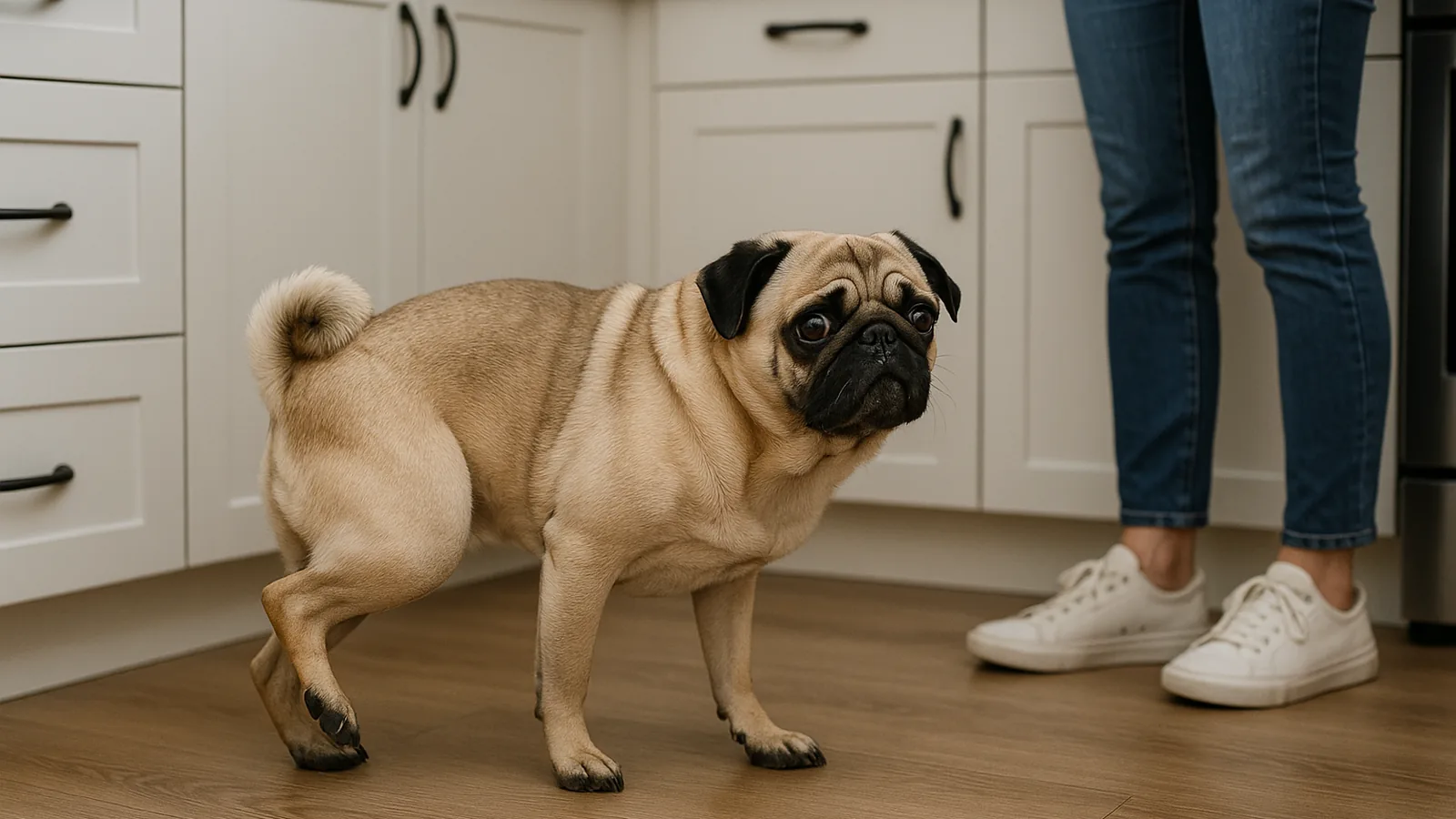
You're watching your small dog trot across the yard and her back leg suddenly pops up. She hops on three legs for two or three steps, gives a little shake, then carries on like nothing happened. You weren't sure what you just saw, and she clearly doesn't seem bothered. That little skip is the classic sign of patellar luxation, and it's one of the most common orthopedic conditions we see in dogs (and a real one in cats too). The kneecap is slipping out of its groove, locking the joint briefly until it pops back in. Whether that skip turns into something that needs surgery depends on a few things, and the conversation starts with understanding what's actually happening in there.
At Noah's Ark Veterinary Hospital in Williamsburg, our team evaluates and grades patellar luxation in-house, supported by our in-house imaging for diagnosis and treatment planning. For pets who need surgical correction, we coordinate referral to a trusted board-certified veterinary surgeon and then continue your dog's care through recovery, rehabilitation, and long-term joint management. We're AAHA accredited, which sets the bar for the diagnostic, anesthetic, and pain management standards orthopedic patients deserve. If you've noticed your dog or cat skipping, bunny-hopping, or showing other signs of knee trouble, contact us to schedule an orthopedic evaluation.
Patellar Luxation Key Points
- The classic sign is a skip. A few steps on three legs, then back to normal. Many families don't notice it for months because it's so brief.
- Grading runs 1 through 4. Higher grades and progressive symptoms typically point toward surgery.
- It drives arthritis. Patellar luxation accelerates joint wear even when the kneecap isn't actively luxated.
- Long-term joint support matters. Weight control, supplements, omega-3s, and rehabilitation are part of the plan for every affected pet.
What is patellar luxation?
The patella (kneecap) normally sits in a groove at the end of the femur and slides smoothly as the leg bends and straightens. The big thigh muscle (the quadriceps) attaches to the patella, which attaches via the patellar tendon to the shin bone (tibia), transferring force from the thigh to the lower leg every time your pet takes a step.
In patellar luxation, the kneecap slips out of its groove, and the joint can't fully extend until it pops back in. Your pet usually responds the same way each time: holds the leg up briefly, sometimes gives a little shake, and walks normally again until the next episode. The patella can slip in two different directions:
- Medial luxation is the more common direction, where the kneecap slips toward the inside of the leg. Most small-breed cases fall here.
- Lateral luxation is less common and tends to show up more often in large breeds.
A few things contribute to the slip. The bony anatomy matters: the way the femur and tibia line up, and how deep or shallow the groove is. The soft tissue matters too: how tight the joint capsule is, and the direction the tendon pulls. Most cases are a mix of factors rather than a single structural defect.
Which dogs are affected?
Patellar luxation has a hereditary component in dogs, and breeding stock are typically evaluated through OFA patellar luxation screening before being bred. The breed groups most commonly affected:
- Small and toy breeds (medial luxation). Chihuahuas, Pomeranians, Yorkshire Terriers, Boston Terriers, Toy Poodles, Maltese, Bichons. This is the biggest group by far.
- Large and giant breeds (lateral luxation). Less common, but documented, including Great Danes, Saint Bernards, and some other large breeds.
- Mixed-breed dogs. Yes, regularly. Conformation matters more than the breed label, and a mix of small breeds in the family tree is enough to inherit the underlying structure.
What are the symptoms of patellar luxation?
The signs run from "you'd never notice" to "clearly impaired":
- The classic skip. A few steps on three legs, then back to normal gait.
- Bunny-hopping, especially in dogs with bilateral disease. Both back legs moving together rather than alternating.
- Reluctance to jump onto furniture or into the car.
- Hesitation on stairs.
- Occasional crying out or holding a leg up.
- Stiffness after rest, especially after long naps.
- Reduced stamina on walks or in play.
One thing worth knowing: how bad the symptoms look doesn't always match the grade. Some pets with high-grade luxation are remarkably functional. Others with lower grades are clearly uncomfortable. Pets are excellent at adapting, and a lot of patellar luxation cases get caught at our wellness exams even when families hadn't noticed anything wrong.
What to do if you notice the skip
- Take a video if you can. The skip is intermittent, and an episode caught on phone is more useful to us than a description. Even a few seconds helps.
- Note the pattern. Which leg, how often, in what situations (after rest, during play, on stairs), and whether your pet seems painful afterward.
- Schedule an orthopedic evaluation. A patellar luxation exam is straightforward and doesn't require sedation. We can grade it, walk through what we're seeing, and talk through the right next step.
- Don't panic about it. Many cases never need surgery. Catching it early gives us the most options.
How is patellar luxation diagnosed and graded?
Most of the diagnosis happens in the exam room, with hands on the knee. We manipulate the leg through flexion and extension to feel whether the patella can be displaced, whether it pops back on its own, and how much pressure is required. We also look at limb alignment, since some pets have bony conformational changes that contribute to the luxation. X-rays document baseline joint status and check for concurrent conditions like cruciate ligament disease or hip dysplasia, which can ride along with patellar luxation in some breeds.
The four grades of patellar luxation
The standard grading system:
| Grade | What happens | Typical signs |
| Grade 1 | Patella displaces only with manual pressure and returns immediately when released | Usually none; often found incidentally on exam |
| Grade 2 | Luxates occasionally during activity, returns spontaneously or with movement | Intermittent skipping; the most common grade we see |
| Grade 3 | Luxated more often than not; reduces manually but pops out again with any motion | Persistent abnormal gait |
| Grade 4 | Constantly luxated and cannot be manually reduced | Significant bony deformity and abnormal limb conformation |
Grade is important, but it isn't the whole conversation. Age, weight, activity level, symptom burden, and overall health all factor into the individualized treatment decision. A Grade 2 in a young active dog with progressive symptoms looks different from a Grade 2 in a senior dog who's been quietly compensating for years.
What are the treatment options?
There isn't a single right answer. The plan depends on grade, symptoms, age, and what you're trying to achieve.
Conservative management
Conservative management is reasonable for low-grade luxation with minimal symptoms, young pets still growing where we're watching rather than committing to surgery, pets who aren't good surgical candidates because of age or health, and families who choose a non-surgical path. The components:
- Activity modification. Limiting high-impact movements, jumping off furniture, and access to slippery surfaces where a slip can produce a flare.
- Weight control. One of the most impactful interventions, especially in small breeds where every extra pound is a meaningful percentage of body weight.
- Physical rehabilitation. Targeted exercises that build the quadriceps and supporting musculature.
- Pain management when there are signs of discomfort.
The catch with conservative management is that it isn't passive. Low-grade luxation can progress over time, and "we'll just watch it" only works if we're actually watching it. That means rechecks, paying attention to changes, and being willing to revisit the conversation if the trajectory shifts. Whether surgery is necessary for any given pet is a moving target, and the answer at age 3 may not be the answer at age 7.
Knee braces
Knee bracing has a role, but a narrow one. Braces can help in low-grade luxation in pets who aren't surgical candidates, for short-term stabilization, or as a bridge while weighing surgical options. The limitations are real:
- An improperly fit brace can actually worsen alignment.
- A brace doesn't address underlying bony deformity.
- Long-term reliance on a brace in a pet who should have surgery can let the condition worsen, resulting in arthritis and muscle atrophy.
Bracing is a tool with a specific role. It's not a universal alternative to surgery, and we'll be honest with you about whether it makes sense for your specific situation.
Physical rehabilitation
Rehabilitation is part of both conservative management and post-surgical recovery, and it's not a passive process. A dedicated rehab plan with a credentialed practitioner produces better outcomes than rest alone. Rehabilitation approaches typically include:
- Therapeutic exercise targeting the quadriceps and supporting musculature
- Range-of-motion work to maintain joint mobility
- Underwater treadmill for low-impact strengthening, which is particularly valuable for pets who can't safely exercise on land
For pets with surgery in the plan, starting rehab pre-operatively (called prehab) and continuing it post-operatively produces meaningfully better outcomes than surgery alone.
Integrative therapies
A few additional tools that work alongside the primary plan:
- Laser therapy for pain and inflammation at the joint level
- Acupuncture for pain modulation, particularly useful in pets whose medication options are limited
- Massage and manual therapy for the muscle tension that builds up from compensatory posture
These are supportive, not standalone. They layer onto the main treatment plan rather than replacing it. We'll talk about the right options for your individual pet.
Surgery: when it's the right call
Surgery is the recommended approach when grades are higher (typically 3 and 4), when symptoms are progressive and interfering with quality of life, when conservative management hasn't held the line, or when a younger pet has bony deformity that's likely to worsen. The goal of surgery is to correct the mechanical setup so the patella stays where it belongs.
Patellar luxation correction is a specialty orthopedic procedure, and we refer surgical cases to a trusted board-certified veterinary surgeon who performs these procedures regularly with the equipment and expertise this level of work requires. For an orthopedic procedure that has to land precisely to produce a lasting result, the specialist setting is the right setting.
The specific procedures used to treat patellar luxation depend on the anatomy and grade, and most surgeries combine more than one technique:
- Trochleoplasty (groove deepening). Creates a deeper, more secure channel for the patella to sit in.
- Tibial crest transposition. Realigns where the patellar tendon attaches to the shin bone, correcting the direction of pull when the bony alignment is contributing to the luxation.
- Soft tissue procedures. Tightening or releasing the joint capsule and surrounding tissues to support the bony repair.
We handle the referral logistics, send your dog's records and imaging to the surgeon, and remain part of the care team throughout. Once surgery is complete and your dog is discharged, post-operative care, laser therapy, pain management, and long-term joint care return to us, so you have continuity of care without bouncing between clinics for follow-up.
What does recovery after surgery involve?
Recovery happens in stages:
| Timeframe | Recovery focus |
| Weeks 1 to 2 | Strict activity restriction; leash-only bathroom breaks; daily incision checks; pain medications; laser therapy to accelerate healing and reduce pain |
| Weeks 3 to 6 | Gradual introduction of controlled walking; beginning structured rehabilitation; continue laser therapy |
| Weeks 7 to 12 | Progressive return to activity; rehabilitation continues with emphasis on strengthening |
| 3+ months | Full return to normal activity in successful cases |
Post-surgical rehabilitation matters enormously. Surgery creates the structural correction; rehabilitation builds the muscular support that turns a good surgery into an excellent functional outcome. Skipping rehab leaves the structural repair without the muscle to take full advantage of it, and that's where you see less-than-ideal long-term results. We support the recovery process with laser therapy, post-op rechecks, and coordination with rehabilitation specialists when more intensive rehab is part of the plan.
What's the long-term impact on the rest of the leg?
The patella isn't operating in isolation. Abnormal joint mechanics over time affect the surrounding structures, and two downstream consequences come up often enough that they're worth knowing about.
Cranial cruciate ligament injury
Dogs with patellar luxation are at meaningfully higher risk for cranial cruciate ligament (CCL) injury. The reason is mechanical: the same abnormal alignment that lets the patella slip also puts unusual stress on the cruciate ligament every time your dog takes a step. Studies suggest the CCL injury rate is several times higher in dogs with patellar luxation than in the general dog population.
Arthritis
Patellar luxation accelerates joint degeneration regardless of grade, because the abnormal mechanics cause cartilage wear that adds up over years, even during the periods when the patella isn't actively slipping. Osteoarthritis is a common long-term consequence in both managed and surgically corrected cases.
Surgery corrects the mechanics that drove the wear, but it doesn't undo damage that's already accumulated before surgery. Pets diagnosed and addressed earlier tend to have less downstream arthritis than pets diagnosed later. If your senior dog has been quietly skipping for years and you're just noticing it now, the joint has been wearing the whole time.
How do I support my pet's joints long-term?
Long-term joint support is one of the most impactful things you can do for a pet with patellar luxation, before surgery, after surgery, and across the rest of their life. There are three pillars.
Weight management
Every extra pound increases mechanical load on the knee with every step. For a 10-pound Yorkie, an extra two pounds is 20% more weight on a joint that already has abnormal mechanics. Weight management is the single highest-return intervention available, and even modest weight loss produces measurable improvement in mobility and comfort. Our nutrition consultations build weight management plans tailored to individual pets, and we'll work through realistic targets based on body condition rather than just numbers on the scale.
Joint supplements
Joint supplements including glucosamine, chondroitin, and newer options like UC-II collagen support cartilage and joint fluid health. The evidence base varies by ingredient and product, and veterinary-grade formulations with documented quality control differ meaningfully from random retail products. We're happy to recommend specific products that fit your pet's individual situation.
Omega-3 fatty acids
Omega-3 fatty acids (EPA and DHA, found in fish oil) are one of the best-supported nutritional interventions for joint health. The mechanism is anti-inflammatory, and the evidence for reducing joint pain in dogs is solid. Two practical points: therapeutic dosing for joint health is meaningfully higher than what's in most multivitamins, and product quality varies a lot. The cheap fish oil on the bottom shelf at the discount store isn't the same as a veterinary-grade product, even when the label numbers look similar.
Common questions about patellar luxation
My dog skips occasionally but seems fine. Does she need surgery?
Not necessarily. Grade 1 and many Grade 2 luxations with minimal symptoms do well with conservative management. The decision involves your dog's age, activity level, where her symptoms are trending, and other factors. We evaluate the individual situation rather than reflexively recommending surgery based on grade alone.
Will the surgery fix the problem permanently?
For most pets, with appropriate technique and recovery, yes. Recurrence rates vary by grade, surgical technique, and individual factors, and higher grades have somewhat higher recurrence rates than lower grades. Most pets who undergo appropriate surgery have a lasting result.
Can both knees be affected?
Frequently, yes. Many dogs with patellar luxation have it on both sides, sometimes more obviously on one side than the other. The orthopedic evaluation always includes both knees, and surgical planning sometimes addresses both during a single anesthetic or over staged surgeries depending on the severity.
How much does surgery cost?
Cost varies based on grade, complexity, whether both knees are addressed, and the specific surgeon performing the procedure. The board-certified surgeon will provide a detailed estimate at the surgical consultation. Honest comparison: the cost of surgery now versus the cost of managing progressive arthritis over the next 10 years isn't always obvious, but it's worth thinking through.
Why do I need to be referred for surgery instead of having it done here?
Patellar luxation correction is a specialty orthopedic procedure that benefits from the equipment, expertise, and case volume of a board-certified surgical specialist. Referring these cases means your dog gets the best chance at a lasting result. We stay involved as your primary care team throughout: we handle the workup, coordinate the referral, and resume care after surgery for rehabilitation, pain management, and long-term joint support.
My senior dog has been skipping for years. Is it too late?
It's not too late, but the conversation looks different. In a senior dog with longstanding patellar luxation, the focus is usually on arthritis management, comfort, and weight control rather than surgical correction. Surgery is sometimes still on the table if the pet is otherwise healthy and symptoms are severe, but for many senior pets the right plan is multimodal medical management. There's a lot we can do for these dogs even without surgery.
Taking the next step
Patellar luxation is one of those conditions where catching it early opens up the most options and waiting tends to narrow them. The skip you noticed in the yard is information worth bringing in. Whether the right answer is conservative management, surgical referral, or something in between, we'd rather have the conversation now than after years of compensatory wear.
If you've noticed a skip in your pet's step, or your pet has already been diagnosed and you're thinking through the next move, contact us to schedule an orthopedic evaluation. We're happy to walk through what we see, what it means, and what makes sense for your dog.