Your intact female dog had a heat cycle six weeks ago and seemed fine. Now she's a little off. Maybe she's drinking more water than usual, or her appetite has slipped, or she just seems tired in a way that doesn't quite fit. None of it screams emergency. None of it would alarm you in isolation. But it's been a few weeks since her heat, and that combination of vague signs is the picture we want you to recognize, because what's happening inside her may be pyometra, and pyometra doesn't wait.
Pyometra is a bacterial infection of the uterus that turns the organ into a fluid-filled, bacteria-loaded mass capable of rupturing and killing a dog within hours. It develops in intact females, almost always within a few weeks of a heat cycle, and it's most common in middle-aged and older dogs. The treatment is emergency surgery, the prognosis with prompt surgery is excellent, and the prognosis with delayed surgery is grim. There's not a lot of middle ground.
At Noah's Ark Veterinary Hospital in Williamsburg, we treat pyometra cases as the surgical emergencies they are. Our in-house imaging supports rapid diagnosis with ultrasound and X-ray, in-house bloodwork gives us same-visit results, and our canine surgery capabilities handle the emergency spay these cases require. We're AAHA accredited, which sets the bar for anesthesia, surgical, and critical care standards. If your intact female is acting off after a recent heat cycle, contact us or come in for emergency care for your dog right away.
Pyometra Quick Guide
- It follows a heat cycle. Most cases develop 4 to 8 weeks after estrus.
- Two forms, very different danger levels. Open pyometra has visible discharge. Closed pyometra has none and is far more dangerous.
- Surgery is the answer. Emergency spay (removal of the uterus and ovaries) is the standard treatment. Medical management is rarely appropriate.
- Spaying prevents it entirely. A timely spay removes the risk completely and reduces the risk of several other diseases.
What is pyometra and which dogs are at risk?
Pyometra develops because of the way the reproductive cycle works. After a heat cycle, the hormone progesterone stays elevated for weeks, and it thickens the uterine lining in preparation for a pregnancy that may or may not happen. That thickened lining is also an excellent environment for bacteria. The cervix is open during and shortly after estrus, which is how bacteria that normally lives in the vagina get in. By the time the cervix closes, the infection can already be established.
What follows is a uterus filling with pus and bacteria, sometimes to dramatic size. Bacterial toxins seep into the bloodstream and start affecting other organs. Without surgery, the uterus can rupture, spilling infection into the abdominal cavity- at which point the situation becomes a true race against time.
Open and closed pyometra
The two forms behave very differently:
| Type | Cervix | Discharge | Why it matters |
| Open pyometra | Still open | Pus draining from the vulva, often foul-smelling | Serious, but the body is at least telling you something is wrong |
| Closed pyometra | Closed | None visible | More dangerous, because the infection has nowhere to go and the diagnosis is easier to miss |
Closed pyometra is the one that catches families off guard. There's no discharge, no obvious external sign that anything is happening to the reproductive tract. The dog just isn't quite herself. Meanwhile, toxins concentrate inside a uterus that's getting bigger and more inflamed every day. By the time the systemic signs become unmistakable, things have already gotten serious. This is why we trust the pattern (intact female, recent heat, vague illness) more than we trust the presence or absence of discharge.
Which dogs are at highest risk
Approximately 25% of unspayed female dogs will develop pyometra in their lifetime, making it a real risk.
| Risk factor | Detail |
| Middle-aged to older intact females | Risk climbs with each heat cycle; most cases occur over 6 years of age |
| Recent heat cycle | The window of highest risk is roughly 4 to 8 weeks after estrus |
| Progesterone-based medications | These can trigger the same hormonal environment that predisposes to infection |
| Previously spayed dogs with retained tissue | "Stump pyometra" can occur if any ovarian or uterine tissue was left behind |
A note on cats: pyometra does happen in intact female cats, though it's less common than in dogs and presents similarly. The discussion below focuses on dogs, but the same principles apply, and any intact female cat acting off in the weeks after a heat cycle deserves prompt evaluation.
For breeders, the decision about when to retire and spay a breeding female involves weighing the breeding program against rising pyometra risk with age. We work through these decisions with breeders as part of our reproductive services. For families with non-breeding intact females, our spay and neuter services prevent the condition entirely, and we'll talk through the right timing for your specific dog.
What are the early symptoms of pyometra?
Here's the frustrating part: the symptoms aren't dramatic, especially in the first few days. They're the kind of thing you might watch for a day or two in any other circumstance. With an intact female after a recent heat cycle, watching isn't the right move.
Signs to take seriously:
- Lethargy or just being "off." Often the first thing families notice.
- Reduced appetite or refusing meals
- Drinking and urinating noticeably more than usual
- Vomiting or diarrhea
- A swollen or bloated-looking belly
- Vaginal discharge (in open pyometra only): often pus-like, foul-smelling, or bloody
- Fever
- Pale gums in more advanced disease
- Collapse in severe systemic illness
Many of these signs could be a lot of different things. In an intact female within a couple of months of a heat cycle, the right move is a same-day visit, not a wait-and-see. Older dogs in particular get their symptoms attributed to age (the increased thirst, the lower energy, the smaller appetite), and pyometra hides comfortably in that explanation until things get bad.
What to do right now if you suspect pyometra
- Call us as you're heading in for emergency care. A call ahead lets the team prepare for your arrival.
- If we're closed, go directly to a 24-hour emergency hospital. This isn't a "wait until morning" situation.
- Don't give any medication you have at home, including anti-nausea or pain medications. We need to know exactly what's happening when she arrives.
- Bring whatever you can remember about her last heat cycle: when it started, when it ended, anything unusual you noticed.
Why is pyometra a medical emergency?
The risks pile up quickly once the infection is established:
- Uterine rupture. A rupture spills infection into the abdomen and produces peritonitis and septic shock. This is the worst-case scenario and often fatal even with immediate surgery.
- Sepsis. Bacterial toxins entering the bloodstream affect every organ system. The dog goes from "off" to "critically ill" rapidly.
- Kidney injury. Toxins damage the kidneys directly, and some dogs develop acute kidney injury that doesn't fully reverse.
- DIC (disseminated intravascular coagulation). A clotting cascade derangement that worsens prognosis substantially.
- Cardiovascular collapse. Dehydration plus septic shock can produce rapid decompensation, sometimes within an hour or two.
When evaluating a pet emergency, pyometra is squarely in the category where the time you wait matters. When you arrive at the clinic, the team starts stabilization immediately- IV access, fluid resuscitation, pain management, and broad-spectrum antibiotics- while diagnostics confirm the diagnosis and surgery is planned. Calling ahead means we're ready for her when you walk in.
How is pyometra diagnosed?
The diagnosis usually comes together quickly once she's in the clinic:
- Physical exam. Often reveals a distended abdomen, fever, and signs of systemic illness.
- Bloodwork. An elevated white blood cell count (often dramatically so), kidney values, and other inflammatory markers. Our in-house lab gives same-visit results.
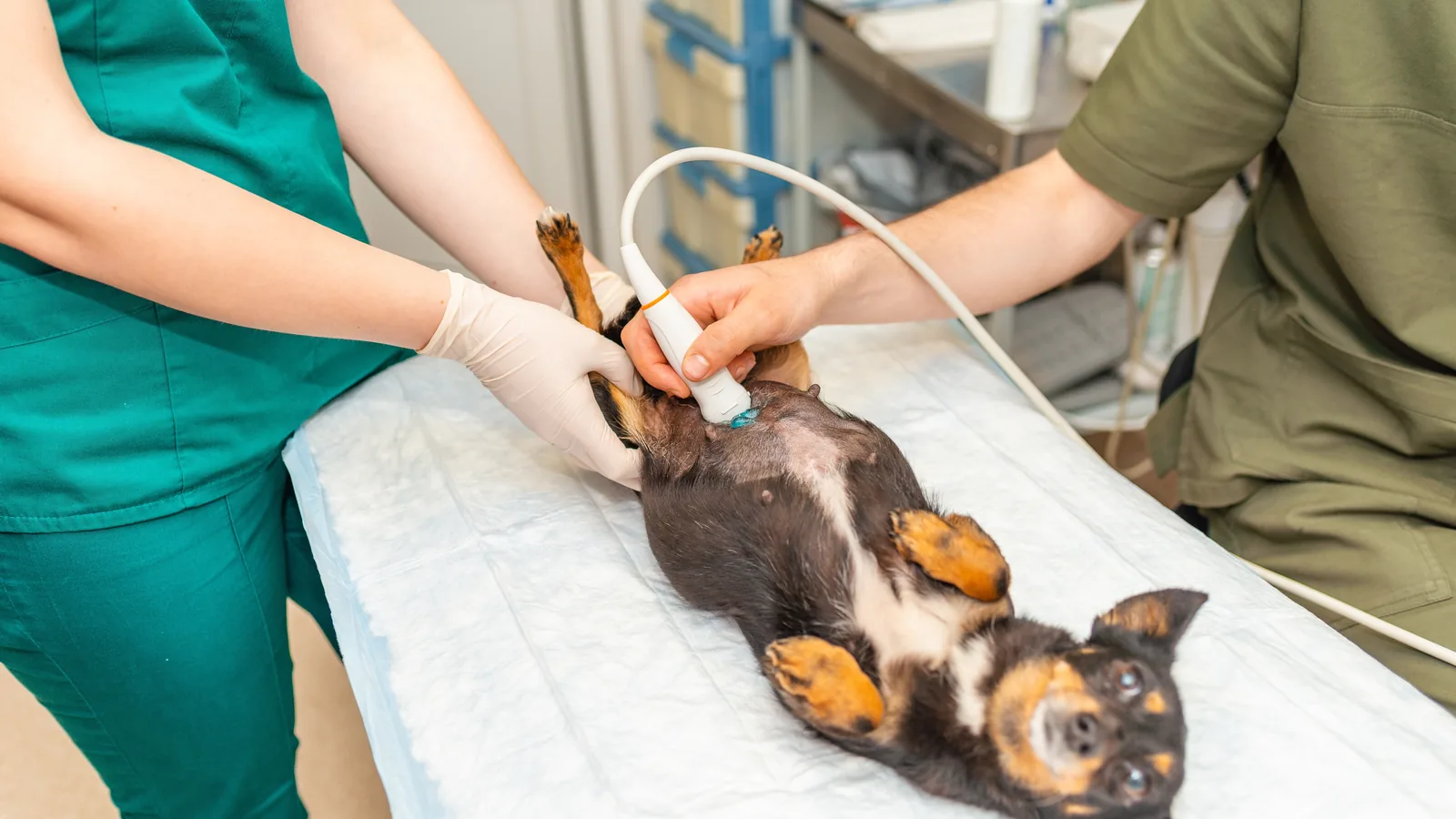
- Abdominal ultrasound or X-ray. Ultrasound shows the fluid-filled uterus directly; X-rays show the distended uterine silhouette. Combined with the clinical picture, imaging is essentially diagnostic.
- Urinalysis. Helps assess kidney function and rule out other concurrent issues.
- Cardiac assessment. Sometimes needed for older dogs going into anesthesia.
Once imaging confirms the diagnosis, the conversation moves directly to surgical planning. There usually isn't a lot of time for a longer discussion, but we'll cover what to expect and what the costs look like before going to the OR. Our in-house laboratory and digital imaging mean the workup happens quickly, without needing to go elsewhere for more advanced imaging.
What does pyometra surgery involve?
Emergency spay (ovariohysterectomy, the same surgery as an elective spay but performed on a sick dog with a diseased uterus) is the definitive treatment. The procedure itself is more complex than a routine spay because the uterus is enlarged, fragile, and full of infectious material that we have to remove without contaminating the abdomen. Perioperative support is what makes the difference between a routine emergency spay and a complicated one:
- IV fluids before, during, and after surgery to support blood pressure and organ function
- Broad-spectrum antibiotics targeted to likely bacterial pathogens
- Multimodal pain control
- Careful anesthetic monitoring because pyometra patients are systemically compromised going in
- Post-operative monitoring for persistent infection, kidney function changes, and incision healing
For stump pyometra in previously spayed dogs, the surgery involves finding and removing the leftover tissue, which is harder than a standard spay because of scar tissue from the original surgery. Most dogs are hospitalized 1 to 3 days afterward, with longer stays for systemically severe cases. With prompt surgery, recovery is usually complete and full activity returns within about two weeks. Noah’s Ark expertly handles emergency surgeries for dogs in Williamsburg, using personalized anesthesia and medications plans built for your individual dog.
How does spaying prevent pyometra?
Spaying removes the ovaries and uterus, which removes the hormonal cycling and the organ that becomes infected. That eliminates pyometra risk entirely. The same surgery also provides several other significant health benefits:
- Eliminates ovarian cancer risk
- Significantly reduces mammary cancer risk, especially when performed before the first or second heat cycle
- Eliminates unwanted pregnancy
- Often reduces hormone-driven behaviors
Spay timing isn't one-size-fits-all. Some breeds (particularly large and giant breeds) benefit from delaying spay until skeletal maturity for orthopedic and cancer reasons. Other dogs are better served by an earlier spay. The right answer depends on your dog's breed, size, family history, and your lifestyle, and we'll work through the spay timing decision with you. For families committed to keeping a dog intact long-term, regular reproductive monitoring and immediate evaluation of any concerning signs after a heat cycle become important.
What does recovery after pyometra surgery look like?
Recovery is usually straightforward, especially when surgery happens promptly. The basics:
- Daily incision checks for redness, swelling, discharge, or any opening of the wound
- Strict activity restriction for 10 to 14 days- no running, jumping, stairs if possible, or rough play
- All medications given as prescribed, including finishing the antibiotic course even if she seems back to herself
- An e-collar to prevent licking that can cause incision infection or dehiscence
- A quiet recovery space where she can rest undisturbed
- A follow-up visit to confirm healing and remove sutures or staples if used
Watch for setbacks after the initial improvement. A dog who was bouncing back and then suddenly seems off again warrants a call. Most dogs return to full normal activity within about two weeks, and the long-term outlook for promptly treated dogs is excellent.
Common questions about pyometra
How quickly does pyometra progress?
It varies, and that's part of what makes it dangerous. Some dogs deteriorate over hours, others over days. The pace depends on whether the cervix is open or closed, the bacterial load, the dog's overall health, and how quickly toxins start affecting the kidneys and circulation. Because there's no way to predict the speed in advance, we treat every suspected case with the same urgency.
Can pyometra be treated without surgery?
Medical management with prostaglandins exists for select cases- typically young, valuable breeding females with open pyometra who are systemically stable- but it carries higher risks, longer recovery, and a real risk of recurrence at the next heat cycle. For the vast majority of pyometra cases, surgery is the right answer.
My dog was spayed. Can she still get pyometra?
Stump pyometra can occur if uterine or ovarian tissue was left behind during the original spay. It's uncommon with modern surgical technique, but it happens. A spayed dog who develops vaginal discharge, urinary signs, or systemic illness deserves evaluation rather than the assumption that she's exempt from reproductive disease.
Is pyometra always after a heat cycle?
The vast majority of cases develop within 4 to 8 weeks of a heat cycle, but pyometra can develop at other times in intact females. The hormonal environment that predisposes to infection is heat-related, but the infection itself can occur outside the typical window. If your intact female is acting unwell, the timing of her last heat is useful information but not a deal-breaker.
Will my older dog tolerate the anesthesia?
Older dogs are at higher anesthetic risk than younger ones, and a systemically ill dog is at higher risk than a healthy one. Both of those are realities. They're also reasons to do the surgery now rather than later. A 10-year-old dog with early pyometra has a much better anesthetic outlook than the same dog with advanced sepsis 48 hours later. Pre-anesthetic bloodwork and individualized anesthetic protocols are what make these surgeries safer for older patients.
Is there any risk of pyometra coming back after surgery?
No, not in a properly performed spay where all ovarian and uterine tissue is removed. The conditions for pyometra (cyclic hormones plus a uterus) no longer exist after surgery. Stump pyometra from retained tissue is a separate situation.
My dog is a breeding female. When should I retire her?
This is a conversation we have with breeders regularly, and the answer depends on the breed, the breeding program's goals, and the individual dog's reproductive history. Pyometra risk climbs with each heat cycle and with age, so most breeding programs include a planned retirement and spay at a defined point- typically by 5 to 7 years for most breeds- to capture the program's goals while staying ahead of rising disease risk.
The bottom line on pyometra
If your intact female is acting off after a recent heat cycle, the right move isn't to watch her for another day. It's to call us. Most dogs recover beautifully from prompt pyometra surgery and go on to live full normal lives. The dogs who don't are usually the ones whose families waited too long, often because the early signs didn't seem dramatic enough to warrant a same-day visit. They almost never do until they suddenly do.
If your dog is showing any of the signs we've covered, contact us for emergency veterinary care in Williamsburg right away. And if you have an intact female who isn't planned for breeding, let's talk about spay timing. It's the most reliable way to make sure this is a conversation you read about and never have to live.