A urinary tract infection in a dog is usually very treatable with the right antibiotics, and for dogs prone to repeat infections, the work that prevents the next one is what really matters. The signs you are most likely to notice are urinating more often, straining, accidents from a dog who is normally reliable in the house, blood-tinged urine, and a lot of licking at the back end. Diagnosis takes more than a symptom list, though. A urinalysis spots inflammation and crystals, and a urine culture pinpoints the exact bacteria so the antibiotic is a targeted choice rather than a guess. For dogs with recurring infections, the question shifts from "how do we treat this UTI" to "why does this keep happening," and that workup looks for the anatomy, hormones, stones, or systemic disease driving the pattern.
At Noah's Ark Veterinary Hospital in Williamsburg, we run urinalysis and bloodwork in-house for same-visit results, with digital X-ray and ultrasound on hand for cases where bladder stones, anatomic quirks, or other contributors need ruling out. Our wellness exams include a urinalysis as part of routine screening, because catching a urinary issue before symptoms flare changes how easily we can fix it. If your dog is showing urinary signs, request an appointment and we will get you on the schedule.
UTI Care Quick Guide
- Testing targets treatment: a urinalysis confirms infection and a urine culture identifies which bacteria, so the antibiotic choice is precise.
- Recurrence needs a workup: repeat UTIs warrant looking for an underlying contributor like stones, anatomy, hormones, or diabetes, rather than just another round of antibiotics.
- Prevention is year-round: hydration, weight control, hygiene, and prompt evaluation of changes all reduce recurrence.
Which Urinary Signs Are Emergencies?
Most canine UTIs are uncomfortable but not emergencies, and they can wait for a regular appointment. A few urinary situations cannot. If your dog physically cannot pass urine, is crying out in pain, or seems suddenly weak or sick alongside urinary signs, treat that as a same-day emergency, because a blocked bladder becomes life-threatening quickly. Watch for:
- Inability to urinate: straining with nothing coming out needs immediate evaluation.
- Severe straining with crying or vocalizing: pain that intense points to more than a typical UTI.
- Blood in the urine alongside lethargy, vomiting, or refusing food: suggests the problem has gone beyond the bladder.
- A firm, distended belly: a possible bladder obstruction.
- Sudden collapse or unresponsiveness in a dog with urinary signs: possible electrolyte trouble from an obstruction.
Our emergency care handles urgent urinary cases while we are open. If we’re closed and your dog cannot urinate or has symptoms in the list above, head to the nearest ER.
What Are the Symptoms and Causes of a UTI?
Early Warning Signs of UTIs
Dogs with a urinary tract infection usually show one or more of these signs:
- Going more often than usual.
- Straining or looking like they are working at it.
- Small puddles produced frequently.
- Blood-tinged urine (pink, red, or brown).
- Cloudy or strong-smelling urine.
- Accidents in the house from a dog who is normally reliable.
- Lots of licking at the genital area.
- Less interest in long walks or play.
Some dogs barely show anything and the infection only turns up on a routine urinalysis, while others are obviously miserable, and how dramatic the signs look does not always match how significant the infection is. These same signs can also point to other bladder problems entirely, including bladder stones, inflammation of the bladder lining (cystitis), prostate issues in intact males, and, less often, bladder tumors. That overlap is the whole reason testing matters: treating on symptoms alone can miss what is really going on.
Causes of UTIs
Most canine UTIs are bacterial, usually E. coli or a similar organism that travels up the urethra into the bladder. Some dogs are simply built or predisposed in ways that make this easier, which is why two dogs in the same house can have very different track records. Common predisposing factors:
- Female anatomy: a shorter urethra sitting closer to the rear increases the odds of bacteria making the trip upward.
- Recessed vulva: a conformation that tucks the vulva inward and traps moisture and bacteria; a frequent driver of repeat UTIs in some female dogs.
- Extra weight: skin folds around the genital area give bacteria more sheltered places to grow.
- Diabetes: sugar in the urine feeds bacteria, so diabetic dogs get more infections and harder-to-clear ones.
- Cushing's disease: this hormonal condition both dampens the immune system and dilutes the urine, a double hit to infection defenses.
- Bladder stones: a rough surface bacteria can cling to.
- Kidney disease: affects how well urine is concentrated and how well the body defends itself.
- A suppressed immune system from any cause.
Most straightforward bacterial urinary tract infections clear up nicely with the right antibiotic, but the list above is why a UTI that keeps coming back despite proper treatment usually has something underneath it that the antibiotic alone is not fixing.
How Are UTIs Diagnosed?
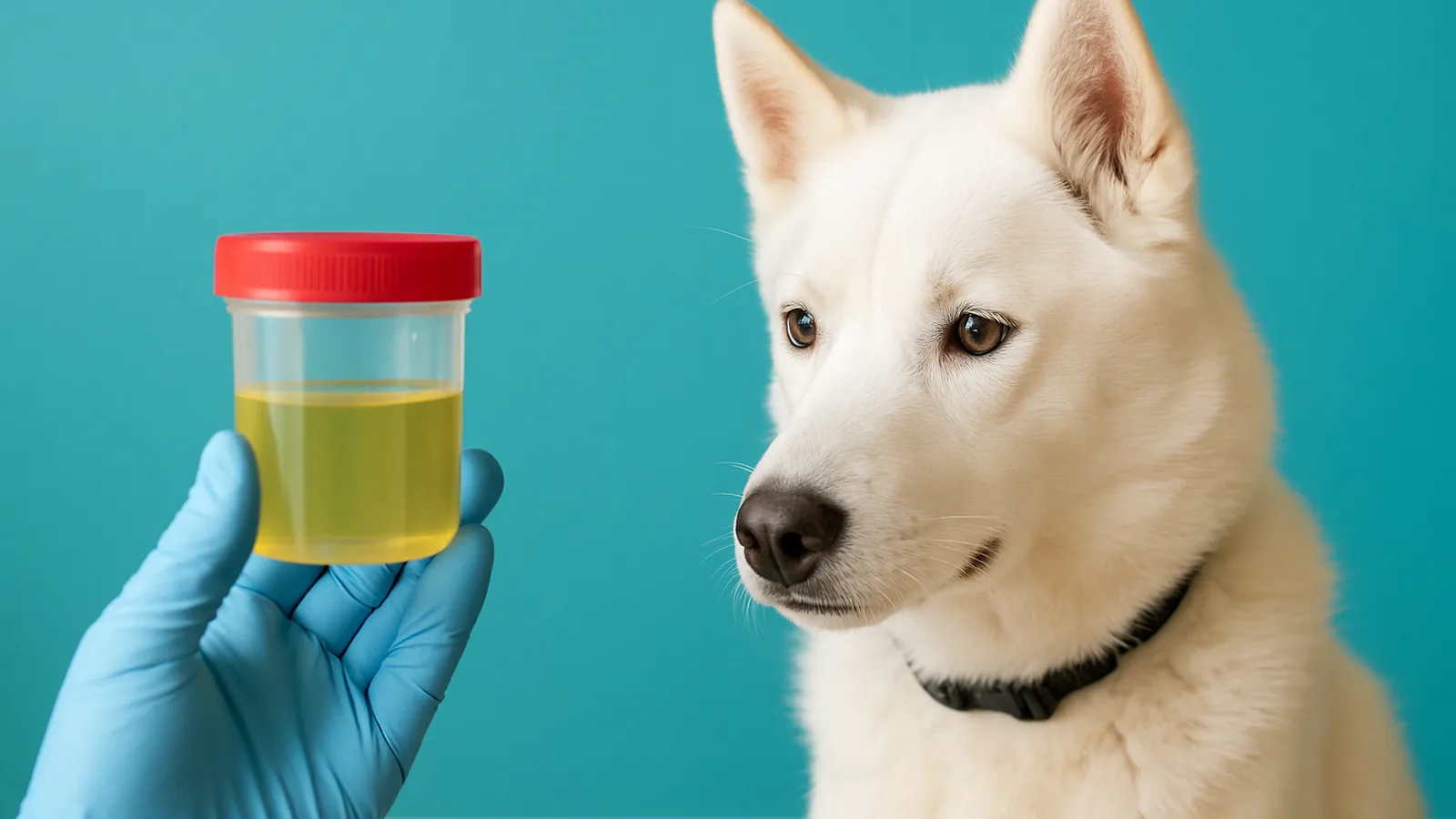
Pinning down a UTI starts with looking at the urine itself rather than guessing from symptoms. A urinalysis sits at the center of the workup and tells us a surprising amount from a single sample, from whether there is infection to early hints of stones or systemic disease. Here is what we read in it:
| Urinalysis finding | What it can indicate |
| Concentration | Dilute urine may signal kidney or hormonal issues |
| White blood cells | Inflammation or infection |
| Red blood cells | Infection, stones, tumors, or trauma |
| Bacteria | Infection |
| Crystals | Predisposition to stone formation |
| Protein, glucose, ketones | Systemic disease |
| pH | Relevant to crystal and stone formation |
When the urinalysis points to infection, a urine culture grows the specific bacteria and tells us exactly which antibiotics will beat it. Skipping the culture sometimes works for a simple, first-time UTI, but it falls short for resistant bacteria and for any dog with a recurring pattern.
We often pair a urinalysis with bloodwork to check kidney health, see whether the infection has reached the bloodstream (a serious, body-wide infection called sepsis), and catch underlying diseases like diabetes. Left too long, a bladder infection can climb up to the kidneys, causing a kidney infection called pyelonephritis, so we would rather catch it early.
When UTIs keep returning or do not clear as expected, X-rays and ultrasound are the next right step. A stubborn or fast-returning infection can point to bladder stones or, less commonly, bladder cancer, a tumor known as urothelial carcinoma, and imaging is how we track down the cause instead of treating the same infection over and over.
How Are UTIs Treated?
Once we know what we are dealing with, treating a UTI is usually straightforward. A confirmed infection is treated with an antibiotic chosen for the bacteria involved, plus a little support for comfort while things settle. The standard plan:
- Antibiotics matched to the cultured bacteria, or to the most likely organisms when a culture is not available, usually for 10 to 14 days in an uncomplicated case.
- Pain relief when straining or discomfort is significant.
- A follow-up urinalysis to confirm it is truly gone, since feeling better does not always mean the bacteria are fully cleared.
- A workup for underlying causes for any dog with recurring infections.
When urinary stones are part of the picture, the plan depends on the stone type:
| Stone type | Treatment approach |
| Struvite | Often dissolves with dietary treatment over weeks to months |
| Calcium oxalate | Does not dissolve; surgical removal (cystotomy) is standard for symptomatic stones |
| Other stone types | Specific protocols apply based on analysis |
After treatment, the analyzed stone type guides the diet that helps prevent the next one. Our soft tissue surgery program handles the bladder stone cases that need surgical removal.
How Do Diet and Hydration Affect Urinary Health?
Diet and water are quiet but powerful tools for urinary health. Good hydration keeps urine dilute and flushes the bladder more often, and the right diet can directly address the mineral or pH problem behind certain stones. None of it replaces treatment for an active infection, but it is central to keeping things calm over the long run. What tends to help:
- Hydration: several water stations, fresh water daily, wet food where it suits, and sometimes a fountain for dogs who like moving water.
- Prescription diets: for dogs with diagnosed stone disease or chronic UTIs, these target the specific mineral or pH issue.
- Urinary supplements: cranberry-based and similar products have modest evidence and work as add-ons under veterinary guidance, not as a main treatment.
- Skip the random diet swaps: changing food without addressing the underlying cause rarely solves a recurring UTI.
We talk through diet for dogs with urinary issues at every wellness exam, matched to your dog rather than generic advice.
What Can I Do To Prevent UTIs?
A lot of prevention comes down to steady habits and not letting changes slide. Regular wellness visits catch urinary problems early, sometimes before you notice anything off at home, and senior dogs or those with diabetes, Cushing's, or kidney disease benefit from a screening urinalysis even when they seem perfectly fine, because those conditions push UTI risk up. At home, a few habits make a real difference:
- Frequent bathroom breaks: long gaps concentrate urine and skip the natural flushing that protects the urinary tract.
- Weight management: obesity and bladder stones are linked, and a healthy weight lowers UTI risk in several ways.
- Genital hygiene: for dogs with skin folds, a recessed vulva, or long coat in that area, gentle regular cleaning keeps the bacterial load down.
- Prompt evaluation of changes: a dog with new urinary signs should be seen sooner rather than watched at home for weeks.
- Consistent water access: especially for dogs who run warm, work hard, or simply are not big drinkers.
When Should I Contact My Veterinarian?
When in doubt, it is worth a call. Most UTIs are not emergencies, but they do need diagnosis and treatment to actually resolve, and watchful waiting tends to backfire with urinary problems. Reach out the same day if you see:
- Inability to urinate.
- Straining or visible distress when urinating.
- Blood in the urine.
- Vomiting alongside urinary signs.
- Fever or lethargy with urinary symptoms.
- A sudden onset of urinary signs in a previously normal dog.
- Another UTI in a dog who has had one before.
Untreated, a UTI can travel up to the kidneys or feed stone formation, so it is always better to check than to wait it out.
Frequently Asked Questions About UTIs in Dogs
Can I treat my dog's UTI with cranberry supplements at home?
Not for an active infection. Cranberry products may modestly lower future UTI risk when used preventively, but they will not clear an infection that is already there. A confirmed UTI needs an antibiotic matched to the specific bacteria, which means a urinalysis and ideally a culture.
My dog keeps getting UTIs. Why does this keep happening?
Recurring UTIs almost always have something underneath: an anatomic issue like a recessed vulva or bladder stones, a hormonal disease like diabetes or Cushing's, or a weakened immune system. By the second or third infection, the goal shifts from "treat this one" to "find and fix what keeps inviting them back."
My older dog is leaking urine on her bed. Is that a UTI?
Maybe, but often not. Leaking while resting or asleep, especially in a spayed senior female, is frequently urinary incontinence in older dogs rather than an infection, and it usually traces back to a weak urethral sphincter rather than bacteria. The two can look similar and can even happen together, so we run a urinalysis to tell them apart. The encouraging part is that incontinence is usually very manageable once we know that is what we are dealing with.
Should I worry about my puppy with a UTI?
Puppies with UTIs are worth a thorough look. In young dogs, a UTI sometimes points to an anatomic quirk present from birth, like ectopic ureters, where the tubes from the kidneys connect in the wrong spot, or to vaginitis showing up as urinary signs. Looking past the infection itself catches these when they are there.
Is increased thirst and urination the same as a UTI?
Not usually. A big jump in how much your dog drinks and the volume they produce, rather than just going more often, more likely points to kidney disease, diabetes, or Cushing's. A urinalysis and bloodwork sort out the cause, and treating an assumed UTI without testing tends to miss these.
How can I prevent UTIs in my dog?
Offer frequent bathroom breaks, keep your dog at a healthy weight, tend to skin fold hygiene if it applies, manage conditions like diabetes carefully, and keep up with wellness exams that include a urinalysis. For dogs with a history of UTIs, we will build a more proactive prevention plan around their specific situation.
Partnering With You on Your Dog's Urinary Health
Urinary trouble is stressful, especially the kind that keeps circling back, and the reassuring part is that most of these cases are very manageable once the right testing and the right plan are in place. We are here to work through both the immediate diagnosis and the long-term picture with you, not just hand over another round of antibiotics. If your dog is showing urinary signs or has a history of recurring infections, request an appointment and we will set up an evaluation.