A dog can carry hemangiosarcoma for months while acting completely normal, because this cancer grows where no one can see or feel it. Hemangiosarcoma is a cancer of the cells that line blood vessels, and it most often takes root in the spleen, liver, or heart, where a tumor can expand without causing a limp, a lump, or a missed meal. It is also among the most aggressive types of cancer in dogs, spreading through the bloodstream long before anyone knows it exists. Too often the first visible sign is the worst one: the tumor ruptures, internal bleeding begins, and a dog who was chasing a ball that morning is suddenly weak, pale, or collapsed.
Catching a silent cancer takes deliberate looking, and that is how we approach exams for middle-aged and senior dogs at Noah's Ark Veterinary Hospital in Williamsburg. A hands-on abdominal exam, in-house ultrasound and digital X-ray, and bloodwork that includes red blood cell counts and clotting function in our AAHA-accredited hospital give us a real chance to find a mass before it becomes a crisis. If we do find something, we walk you through the results and what each option involves before anything is decided, so the plan fits your dog and your family. If your dog is due for a checkup, get in touch and we will take a careful look.
The Hard Facts About This Hidden Cancer
- Hemangiosarcoma grows quietly inside blood-rich organs like the spleen, heart, and liver, so a dog can look and act completely healthy right up until a tumor bleeds.
- Not every splenic mass is cancer, and the only way to know for certain is to remove the spleen and send the tissue to a pathologist.
- Golden Retrievers carry an estimated lifetime risk of about one in five, which makes routine imaging for at-risk seniors genuinely worth considering.
- Treatment aims to buy good, comfortable time, and research into newer therapies is active enough that clinical trials are worth asking about.
What Exactly Is Hemangiosarcoma, and Why Is It So Dangerous?
Hemangiosarcoma is a cancer of the cells that line blood vessels, and that origin is exactly what makes it so dangerous. In the spleen, heart, and liver, organs saturated with blood flow, a soft, blood-filled tumor can reach a surprising size before anything feels wrong.
The danger is twofold. First, these tumors are fragile: a mass on the spleen can develop a small tear and bleed into the abdomen, sometimes leaking, then clotting, then leaking again. Second, because the cancer starts in the vascular system, it can seed itself elsewhere through the bloodstream early on. It's one of many types of canine cancer, but among the most aggressive.
There is one important exception. When hemangiosarcoma appears in the skin itself, usually as a firm red or purple bump on a thinly haired, lightly pigmented belly or flank, it behaves far less aggressively than the internal form. Caught early and removed completely, the skin-only version carries a much better outlook. That's a real reason to have any new bump looked at rather than watched.
Which Dogs Are Most at Risk?
Hemangiosarcoma turns up most often in dogs past middle age, generally older than six, and certain breeds carry substantially more risk than others. Breed and age patterns in canine hemangiosarcoma point to Golden Retrievers, German Shepherds, Portuguese Water Dogs, Bernese Mountain Dogs, Flat Coated Retrievers, Boxers, and Skye Terriers, among others.
The Golden Retriever numbers are the ones that stop people: the estimated lifetime risk in this breed sits near one in five. That doesn't mean a Golden is destined to develop it, and plenty live long lives without ever facing it. It does mean that a vague off day in an eight-year-old Golden deserves a closer look than the same day in a low-risk breed.
No breed is exempt, though. Mixed-breed and smaller dogs develop hemangiosarcoma too, and age remains the single biggest factor across the board.
Can Screening Catch It Before an Emergency?
Screening can absolutely find a splenic mass before it ruptures, and that changes everything about what comes next. A planned surgery on a stable dog is a very different situation from an emergency splenectomy on a dog who is bleeding internally, both for the outcome and for what it asks of your family.
For at-risk breeds entering their senior years, that usually means adding abdominal ultrasound and chest X-rays to the regular checkup rather than waiting for a symptom. Bloodwork alone won't find a mass, so imaging is the part that does the real work. Our senior dog care visits are where we build that schedule with you, and twice-yearly exams give us more chances to notice a change early.
Screening isn't a guarantee. A tumor can develop between visits, and no imaging catches everything. What it does is shift the odds meaningfully in your favor, which is the honest case for it. Thorough physicals and preventive care for dogs look for trouble before it announces itself, and a splenic mass found on a routine exam leaves far more options open than one found mid-rupture.
What Are the Early Warning Signs, and When Should I Worry?
The earliest signs of hemangiosarcoma are frustratingly ordinary: a quiet day, a skipped meal, gums that look a shade too pale. These warning signs of cancer come and go, so a dog who seems off on Tuesday can bounce back by Thursday and be easy to write off.
When a splenic tumor leaks a little blood, the body reabsorbs it and the dog recovers, at least for a while. Then it happens again. That on-and-off pattern is what makes this cancer so easy to underestimate, until the day a bleed doesn't stop and a dog collapses without warning.
A few signs deserve attention even when they seem to pass:
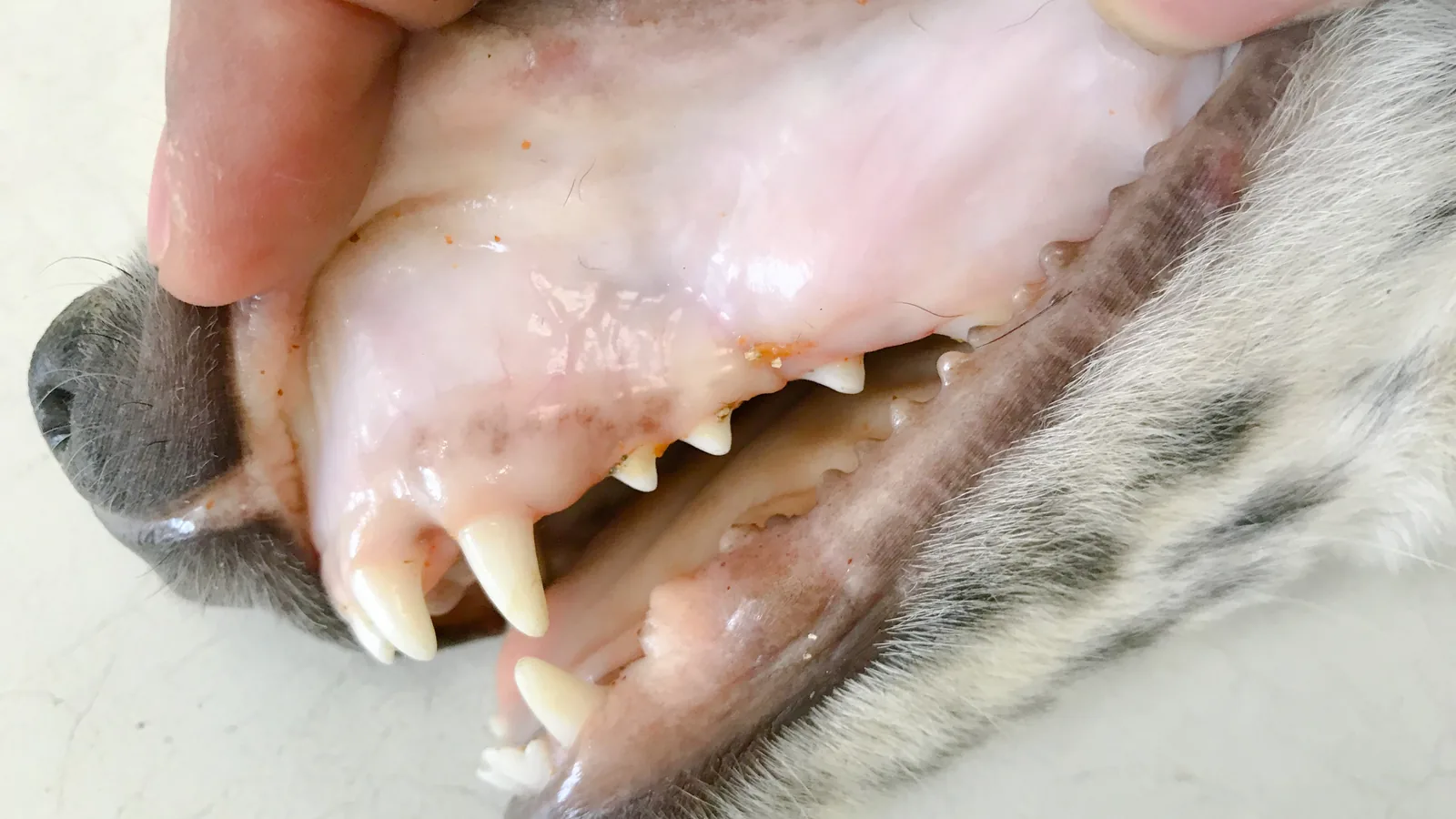
- Pale or white gums: Healthy gums are pink, so gums that look pale, gray, or white can mean your dog is losing blood internally.
- Sudden weakness or wobbliness: A dog who briefly can't get up, staggers, or seems disoriented may be bleeding somewhere you can't see.
- Fast or heavy breathing: When blood volume drops, the body speeds up breathing to move more oxygen, so panting at rest is worth noting.
- A belly that looks bigger: A distended or swollen abdomen can mean blood is pooling inside.
- Episodes of collapse that resolve: Fainting and then seeming fine isn't reassuring; it can be a small bleed that stopped on its own.
If these symptoms happen while we're open, call us and come straight in; we provide emergency care on site. After hours, head to the nearest veterinary ER, because active internal bleeding can need stabilization and overnight monitoring that can't wait until morning.
How Is Hemangiosarcoma Diagnosed?
Diagnosing hemangiosarcoma usually starts with imaging and bloodwork to locate a mass and gauge whether a dog is bleeding, then moves to sampling the tissue to confirm the cancer type. No single test does it all, so we build the picture in layers, least invasive first.
An abdominal ultrasound is usually the fastest way to see a mass on the spleen or liver and to spot free blood pooling where it shouldn't be. Ultrasound is painless, usually needs no anesthesia, and gives us a real-time look inside the abdomen. Alongside it, in-house bloodwork and cytology let us check red blood cell counts, clotting function, and organ values quickly, so we're not waiting days to understand how stable a dog is. Digital radiographs round out the view, especially for the chest, since that's a common place for this cancer to spread.
When a splenic tumor ruptures and blood floods the belly, veterinarians call it a hemoabdomen, and it's often the first moment anyone knows the cancer exists. A dog in that situation needs assessment right away, because the workup and the emergency arrive together.
Is It Hemangiosarcoma, or Could the Mass Be Benign?
A splenic mass on ultrasound cannot be identified as cancer or not cancer by its appearance, no matter how experienced the person holding the probe. The only way to know is to remove the spleen and send the tissue to a pathologist. That uncertainty is genuinely hard to sit with, and it is also the reason surgery often serves as both treatment and diagnosis.
Roughly two-thirds of splenic masses turn out to be malignant, and hemangiosarcoma accounts for most of those. That leaves a real minority that are something else entirely:
- Hemangioma: the benign cousin of hemangiosarcoma, made of the same blood vessel lining cells but without the ability to spread. Removing the spleen cures it outright.
- Hematoma: a contained pocket of clotted blood rather than a tumor at all, which also resolves completely with removal.
- Nodular hyperplasia: a benign overgrowth of normal splenic tissue, common in older dogs and harmless once out.
Hemangioma and hemangiosarcoma can look identical on imaging and even to the naked eye during surgery. Only the pathology report separates them, which is why we always send the tissue, and why a small but meaningful number of families get news far better than they were bracing for.
Can Hemangiosarcoma Affect the Heart?
Hemangiosarcoma can develop in or spread to the heart, most often on the right atrium, where a bleeding tumor can fill the sac surrounding the heart and interfere with its ability to pump. It can cause fainting, exercise intolerance, and sudden collapse, and it shows up on its own or alongside a splenic tumor.
That fluid buildup, called pericardial effusion, squeezes the heart from the outside. Irregular heart rhythms, or arrhythmias, can develop too, changing how a dog tolerates activity and anesthesia.
A cardiac ultrasound lets us look at the heart's chambers and often see the mass itself, check for fluid around it, and assess how well it's pumping, while an EKG tracks the electrical rhythm. When a case needs a board-certified cardiologist, we'll point you toward specialty imaging and coordinate that referral before any treatment plan is set.
What Are the Treatment Options for Hemangiosarcoma?
Treatment for hemangiosarcoma centers on removing the tumor when that's possible, then slowing the cancer's spread with medication, with the honest goal of buying good-quality time rather than promising a cure.
Here's how the main approaches fit together:
- Surgery: For a splenic tumor, removing the spleen (a splenectomy) is often the first step, both to stop the bleeding risk and to get a tissue diagnosis. We provide soft tissue surgery and will talk candidly about which procedures fit here and when a specialty center with overnight care is the better setting.
- Chemotherapy: Because this cancer spreads through the bloodstream, chemotherapy after surgery is commonly recommended to slow the microscopic disease imaging can't see. Most dogs tolerate veterinary chemotherapy far better than people expect, with comfort as the priority.
- Immunotherapy: Newer approaches lean on immunotherapy, which trains the dog's own immune system to recognize and attack cancer cells.
- Radiation: For some tumors, radiation is part of the plan; specialized radiation therapy facilities handle the equipment and dosing, and we refer families to them when it fits.
- Palliative care: When the goal shifts fully to comfort, palliative care focuses on pain control, managing bleeding episodes, and preserving good days for as long as they last.
Are There Newer Treatments Worth Asking About?
Hemangiosarcoma is an active area of veterinary cancer research, and there are more experimental therapies for dogs with hemangiosarcoma in development now than at any point previously. Clinical trials at veterinary teaching hospitals are enrolling dogs in various stages of the disease, and ongoing hemangiosarcoma research continues to fund work on earlier detection and better treatment.
Trials aren't right for every dog or every family, and they aren't a guaranteed benefit. They are worth asking about, though, especially early in the process, since eligibility often depends on what treatment a dog has already received. Ask us and we can help you find out what's currently enrolling.
How Long Do Dogs Live After a Hemangiosarcoma Diagnosis?
Survival times vary a great deal, and averages hide how differently individual dogs do. Broadly, surgery alone buys a matter of months, adding chemotherapy roughly doubles that, and the skin-only form does far better than any of the internal ones. Where a specific dog lands depends on how far the cancer has already spread, which organ it started in, and how that dog feels day to day.
| Situation | What it typically buys |
| A ruptured tumor with no treatment | Days to a few weeks |
| Splenectomy alone | Around one to three months on average |
| Splenectomy plus chemotherapy | Around five to seven months on average |
| Skin-only form, fully removed with clean margins | Often much longer, sometimes years |
| Heart-based tumors | Generally shorter, and highly individual |
These figures describe groups of dogs, not yours. Some dogs live well past the averages and some fall short of them, which is why we recheck, re-image, and adjust rather than treating a number as a schedule. What matters more than the statistic is how your dog is doing this week.
How Do Families Manage the Cost and the Emotional Weight?
Managing a hemangiosarcoma diagnosis means facing two hard things at once: the financial reality of cancer care and the emotional gut-punch of the news itself. The cost of dog cancer care, from diagnostics to surgery and chemotherapy, adds up, and knowing what to expect helps families make decisions that feel right rather than rushed.
There's no single "right" choice here. Some families pursue every available treatment; others choose comfort-focused care from the start. Both are acts of love, and our job is to lay out the trade-offs clearly so the decision is yours. It can also help to know that navigating a hemangiosarcoma diagnosis is a road many families have walked before you, and that seeing how others thought it through takes some of the loneliness out of it.
We're an independently owned practice, and cost-conscious, practical care is part of who we are. Bring your questions, your worries, and your budget realities to the table; we'd rather have that conversation openly than leave you guessing. We also offer CareCredit to help with financial planning.
Frequently Asked Questions About Hemangiosarcoma in Dogs
Is hemangiosarcoma painful for my dog?
In its quiet phase, hemangiosarcoma often isn't painful, which is part of why dogs act normal for so long. Discomfort usually shows up when a tumor bleeds, stretching the organ or filling the abdomen with blood, which can cause weakness, restlessness, or a tender belly. Whether the plan is surgery, chemotherapy, or comfort-focused care, pain control and keeping your dog feeling like themselves stay front and center.
If the spleen is removed, can my dog live a normal life?
Dogs live perfectly well without a spleen, so removing it doesn't, by itself, limit a dog's day-to-day life. The spleen filters blood and stores some reserves, but other organs take over those jobs. The harder question is the cancer itself, which is why surgery is often paired with chemotherapy or immunotherapy. After a splenectomy, we focus on recovery, monitoring, and rechecks to catch any signs of spread early.
Could I have caught this sooner?
This question comes up in nearly every one of these conversations, and the honest answer is that most families could not have. Hemangiosarcoma is built to hide, and the early signs are the same ordinary off days every dog has now and then. Screening imaging improves the odds of an earlier catch, but no one misses this out of carelessness. If you're carrying guilt about it, set it down.
Making the Most of the Time After a Diagnosis
A hemangiosarcoma diagnosis is heavy news, but it's not the end of good days. Many dogs go on to enjoy meaningful, comfortable time with their families, filled with the ordinary things they love. Regular rechecks, repeat imaging to watch for recurrence, and honest check-ins about how your dog is doing at home let us adjust the plan as things change.
You don't have to figure any of this out alone. Whether you want to talk through treatment, set up screening for an at-risk senior, or focus on comfort-centered care, Noah's Ark Veterinary Hospital in Williamsburg is here to help you make the choices that fit your dog and your family. If your dog has been diagnosed or you have concerns after an exam, reach out to schedule and let's build a plan together, one that honors both the time you have and the love behind it.